
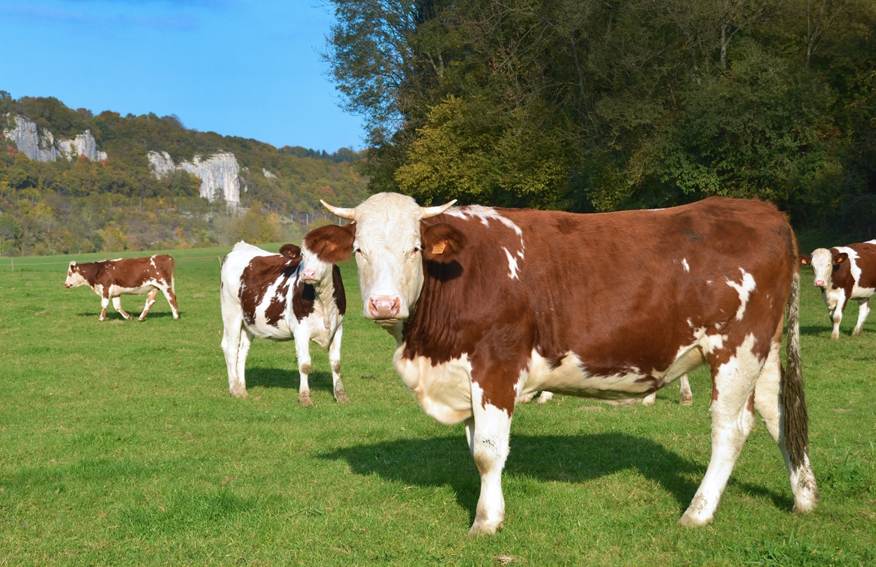
How can we produce enough nourishing food for all without destroying the planet’s health?
We all have to eat. The fact that there are now 8.3 billion of us on the planet makes that a serious challenge. Unfortunately, the intensive agriculture that we are now practising is making the situation (including our health) worse. At the same time Climate Change is producing even more difficulties for farmers to produce the food we need.
How is that affecting different countries?
A recent National Emergency Briefing in the UK run by some serious experts and scientists discussed the fact that food security in Britain is imperilled by many factors. These include Climate Change, extreme weather and the fact that the UK is so dependent on food imports. (40-50% of British food is imported.) Furthermore, the experts believe “food system failure is a direct national security risk. When food systems break, the result is empty shelves, price spikes, unrest and political instability — and the UK is woefully unprepared.”
Numerous developed countries have problems with food security from time to time, caused for example by poverty, war and extreme weather. While this is shocking, developing countries have problems on a different scale. For example Sara Gustafson reports that “While declining globally, hunger continued to rise across Africa in 2024.”
It seems that hunger in Africa is rising due to a combination of factors including the COVID-19 pandemic, Russia’s invasion of Ukraine, extreme weather events, and G20 countries’ export restrictions on food, animal feed, and fertilisers. All this has created rising food prices and thus hunger. Poverty increases the threat of those factors enormously.
What is food insecurity?
Food insecurity is defined as when people don’t have enough to eat and don’t know where their next meal is coming from.
The World Food Programme reported that “Food insecurity is expected to remain at alarming levels as we enter 2026.”
These are a few examples to demonstrate that there is food insecurity in the world.
Obviously numerous other countries have similar problems. Producing enough food to feed everybody fairly is only going to get more difficult. This problem is compounded by the fact that right now agriculture also makes a huge contribution to Climate Change and loss of biodiversity, both of which are making food production much more difficult.
How is our present system of agriculture affecting the planet?
According to an article on the site Our World in Data, agriculture has a significant impact in three key ways:
- It requires large amounts of fresh water
- It is a crucial driver of Climate Change, responsible for around one quarter of all Greenhouse Gas emissions
- It has a critical impact on the world’s environment due to its enormous land use. Half of the world’s habitable land is used for agriculture.
Do have a look at this article to see some of the other global impacts. These all come together to cause the obvious issues we are facing like huge storms, flooding, droughts, irregular weather patterns, forest fires and massive loss of biodiversity. We may face worse in the future if we don’t change our lifestyles.
Storms are getting stronger
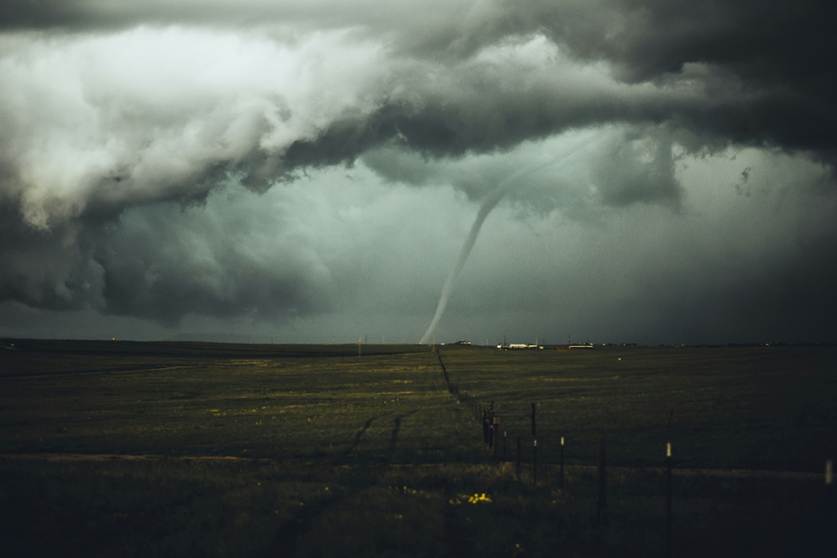
As you must know by now, Climate Change is causing appalling problems in our lives. You will have seen from the paragraph above that our weather is causing major difficulties and that is bad enough. However, if humanity allows the temperature to rise too much then the situation will get a great deal worse.
I am not telling you this to cause alarm, but to say that if we fight for a better life, we still have a chance to get there. There are many things that we can do to make a difference. People out there are already doing some of them, although not in the numbers required. We can take hope if we each act and do our bit.
There are Good Things Happening in Agriculture
Let me tell you about some of the good things we are doing in farming to improve the situation. It is clear however, that we MUST change our food system and soon. If you want to know a bit more about the dangers of our present system and things you can do to make a difference, do have a look at my previous blog “Our Food System is killing us and cruel to animals”.
In 2018 FAO (Food and Agricultural Organisation) ran an innovations fair for family farmers in developing countries. For me the results are full of courage and hope.
One success has been with Climate Smart Villages in West Africa (a group of villages working together) where farmers have been struggling with food production because of Climate Change. This involves testing out ideas such as different varieties of crops, soil and water conservation and so on in one village. The polished ideas are then taken to other villages where they can be implemented. This idea is now spreading to different parts of Africa.
Women farmers’ incomes have also improved through the development of gender-sensitive activities including off-season gardening and processing of non-timber forest products in Senegal, moringa tree planting in Niger and Burkina Faso, sesame cropping in Mali and soybean production in Ghana.
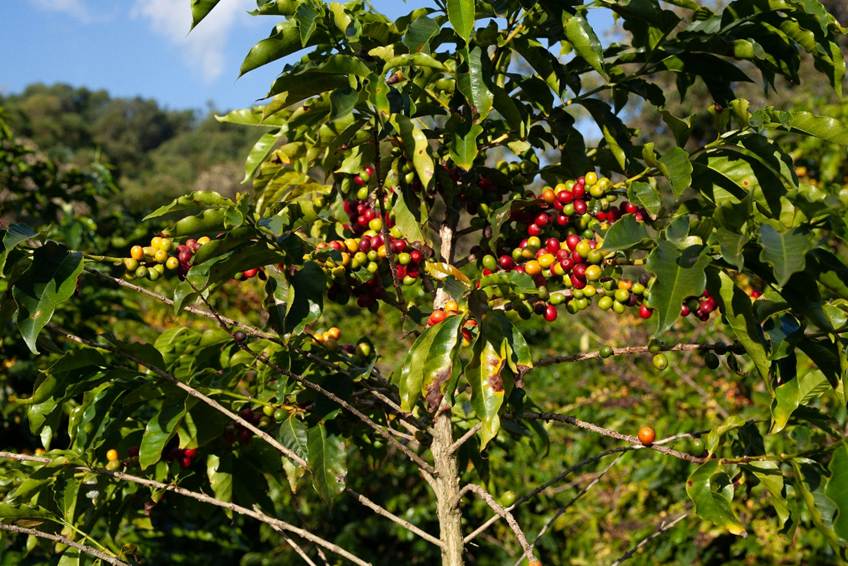
Coffee Bushes
Regenerative Farming
The Rainforest Alliance has been helping farmers in Kenya to improve the health of their soil and thus their incomes. They are now much more able to adapt to Climate Change.
Their report defines regenerative agriculture as “a farming approach that heals the earth, giving back to the land more than we take from it. Relatively simple techniques—like planting shade trees and a variety of other crops—can have a dramatic effect on the land by revitalizing soils, encouraging biodiversity, improving crop yields, and reducing the need for agrochemicals.”
This may feel to you like just a few farmers making a difference to their families. But this is not so. Worldwide, the use of Regenerative Agriculture is increasing.
An article in Nature magazine claims that “A revolution is sweeping Europe’s farms!” and also “Momentum is building for regenerative agriculture, a set of approaches that could help farms to weather the changing climate and make them more profitable.” You will find more examples throughout the world.
Agroecology and Agroforestry (i.e. using the Earth’s natural resources)
At the recent COP in Brazil the Government of Brazil, with the technical support of the Food and Agriculture Organization of the United Nations (FAO) launched TERRA – a global platform designed to scale resilient and restorative agroecology and agroforestry.
This is an attempt to help their farmers to transition to using agroecology and agroforestry. They say these involve adopting sustainable farming practices that work in harmony with Nature instead of against it: integrating trees and livestock with crops, implementing natural pest control, using home-made compost, rotating crops to improve soil nutrition, and managing water sources. This will make the farmers less vulnerable to climate shocks and vastly improve the health of their soil.
These are only a few of the vast number of ideas that are coming up in modern farming. Of course, many countries and individual farmers have not got there yet. However, it is clear from research that these new methods can save our soils for the future and increase farmers’ incomes. At the same time with a renewed care for the Earth, they can care for the planet too.
What Can You Do to Make a Difference?
As I have mentioned in the previous blog mentioned above, agriculture is one area where each of us can make a difference. Do have a look at my ideas there about what you can do. In addition you can:
- Find a local farmer who is into regenerative agriculture and be his friend. Buy his produce and tell everybody about him.
- Don’t buy from a supermarket unless you must: too much plastic and too many pesticides.
- Hunt for products that come from organisations like the Rainforest Alliance which encourage good practice and help their farmers change.
- I have said it often before, but cutting out meat (especially beef) is one of the best things you can do to help us have a sustainable future.
- Grow your own vegetables with your own homemade compost if you possibly can. They will taste so much better while helping the planet.
- Don’t use pesticides.
- Don’t buy highly processed foods. They are very bad for your health.
Have Hope
We may not succeed in making a difference, but we can most certainly try. Get together in your communities and see what you can come up with. Your children and grandchildren deserve it.
If you are not yet on my mailing list and wish to be on it, please use the form on the Home page, this will help our administration and ensure you receive your own copy.
Photos by Gilles DETOT, Nikolas Noonan and PROJETO CAFÉ GATO-MOURISCO on Unsplash