
“Words can light fires in the minds of men. Words can wring tears from the hardest hearts.” Patrick Rothfuss
Words matter. They can inspire us to action, or reduce us to immobility and despair.
Katherine Hayhoe, a much-respected Canadian climate scientist, has said in her book “Saving Us: a climate scientist’s case for hope and healing in a divided world”, that “the most important thing we can do to address climate change is talk about it.” She has said this repeatedly in all her publications and talks. Have a look at her TED talk here.
It seems that her intention is to encourage people to recognize there is a problem. Only then can they see that there is a contribution they can make.
Words can inspire or depress
Our words can be very powerful and can inspire others to change their lives in a way that will contribute to a better future. These words can be positive and persuade and inspire us to make a difference. They can also be negative and discouraging. For example in a recent speech at the UN General Assembly, Donald Trump said that “this climate change, it’s the greatest con job ever perpetrated on the world…”
These words are not coming from an insignificant, unknown individual, but from the President of the United States of America. Not only are US citizens influenced by what he says, but others in positions of power, such as investment bankers and CEOs of oil companies will be rubbing their hands in glee at his words. He has given them permission (if they needed it) to rape and destroy our world.
On the other hand, a young woman who has set the world on fire, Greta Thunberg, has used words that inspire millions. A recent article on Fridays for Future, which was set up by Greta in 2018, says “Their call for action sparked an international awakening, with students and activists uniting around the globe to protest outside their local parliaments and city halls. Along with other groups across the world, Fridays for Future is part of a hopeful new wave of change, inspiring millions of people to take action on the climate crisis.”
Words from the media
The media in the past has consisted of newspapers and magazines, radio and television, and social media. Nowadays there are other new and interesting ways of distributing news.
This article says the media “can play a critical role in facilitating social change and shaping public opinion and attitudes. The media, through its reporting, can put a spotlight on critical developments that impact negatively and positively on people’s lives, as well as bringing to the fore issues that are often ignored and voices that are marginalised. The media’s agenda-setting function often influences debate, thinking and priorities within society.” One would think, based on that quote, that the media’s words would have a positive influence on our willingness to fight the chaos that is facing us.
Are the media influencing our actions on Climate Change?
According to the above quote, the media’s job is to educate us about very important issues that will affect our lives. On the subjects of Climate Change and Loss of Nature they are clearly not doing that. They are failing us very badly in something that is critical to all of us.
The “Good” Newspapers
One or two of the world’s major newspapers have on-going sections on the Climate and the urgency of the problems facing us. It is encouraging to see their commitment.
In 2019 for example, the Guardian newspaper, a major UK media outlet, “declared the climate crisis as the defining issue of our time. They committed to placing it at the forefront of its business and journalism.” Today, that mission is more urgent than ever as the progress towards a healthier planet is under threat.
As for many of the others, silence seems to be golden!
The issue of course is that many of the big media moguls are in business for profit, power and influence. This tends to make them lean towards the attraction of the big fossil fuel companies. At the same time, companies such as the BBC in Britain often have their own internal rules that call for balance. Thus they will not speak out on one side of an important issue when they could influence and educate large parts of the population. (Recently the wonderful nature programmes from people like David Attenborough have started being more truthful. But still they hang back from complete descriptions on what we are doing to our world and why we must change our way of life.)
So where can we find good information and words that inspire us?
Podcasts!

There are some exceedingly good podcasts to be found today, that inform us truthfully, not just with the bad news about the climate, but also the good news of how people are tackling the situation. These often leave me feeling inspired and hopeful.
Here are some of the best ones I have found:
- Outrage and Optimism by Christiana Figueres, Tom Rivett-Carnac and Paul Dickinson
- Rewilding the World by Ben Goldsmith
- Radical with Amol Rajan (different ideas for the future)
- What if we get it right? Ayana Elizabeth Johnson, Marine Biologist
These are podcasts that I personally have found useful, and that I know are trustworthy sources. There are a great many more to be found on the Internet. You may wish to check the authenticity of their information.
YouTube
This is a source of really interesting information on the troubles that beset our world. Like many others these days, their information will need to be checked. If you are not sure, check out the person who is doing the video. Find out what people are saying about them. Do they look reputable? It is important to know if the information you find is truthful.
TikTok
This is a similar platform for videos, which is becoming increasingly popular. The same reservations about the information apply.
There is a lot of information on Facebook. Most of it I find hard to trust, but it can often serve as a pointer for us to go and find out if something that appears outrageous is actually true.
There is an American lady called Heather Cox Richardson who writes a daily article published both on Facebook and Substack. She writes about Democracy in America, which does not relate directly to Climate Change, but nevertheless she is a pointer towards more positive thinking. She reminds me that there are still so many courageous people in the world.
Blogs/Newsletters
You may find many really positive and encouraging words written in blogs and newsletters nowadays. For example CarbonBrief produces a weekly newsletter, particularly related to Climate Change. Obviously, there are many more.
Reading positive information can also inspire and remind us that progress is being made, for example about the rail network, and that we are not alone in this fight.
The Rail Network
We are making progress
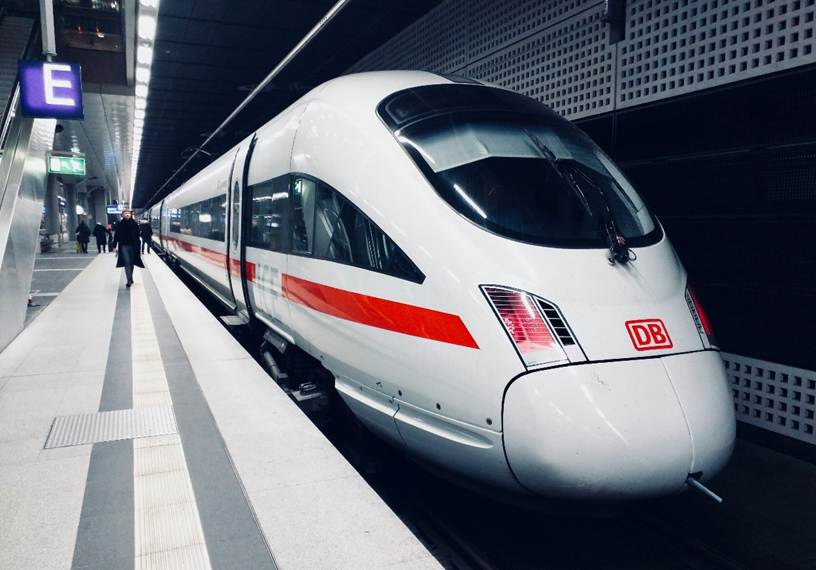
Carbon emissions from flying can be very high indeed and we have long needed to increase the amount of train travel worldwide.
In a section (07) headed “Trains are becoming faster and more popular all over the world” we read that “In the EU, the rail network grew from less than 3,000km to over 8,000km between 2000 and 2025. The cross-border high-speed rail connections (ICE/TGV) between Germany and France, similar to the Eurostar between Paris/Brussels and London, have significantly shifted market shares away from flying. The high-speed rail line between Berlin and Munich, which opened in December 2017, has resulted in a massive shift from air to train travel. Globally, the growth in high-speed rail travel in China is particularly impressive. China’s rail network now spans over 45,000km. And Turkey, Egypt and Saudi Arabia are also building large high-speed networks.” As a traveller I find that thrilling.
What can you do to make a difference?
This beautiful Earth is our home. If we want our future generations to enjoy it, each of us must act. There is no good sitting back and waiting for the world to change, or for somebody else to make a major difference.
Robert Swan, British explorer and environmentalist, said, “The greatest threat to our planet is the belief that someone else will save it.” He is right. We need to do it ourselves.
“The final chapter is ours to write”
These words were written for a documentary series called the Earthshot Prize: Repairing our planet.
We know what we need to do. What happens next is up to us. For me that means that we are free to create our own future – to have it as we dream about it – a world where we care for Nature, a realm of peace and equality.
That may sound like “pie in the sky” but what we dream of we must work for. Please get out there and start creating that better future. Talk about Climate Change and what we are doing to destroy the environment. Talk to your neighbours about the loss of birdlife in your area and what you can do about it. Develop “a cause” and tell people about it and rope them in to help. There are a million causes out there to talk about.
Just keep talking: your grandchildren’s future is coming faster than you know.
If you are not yet on my mailing list and wish to be on it, please use the form on the Home page, this will help our administration and ensure you receive your own copy.
Photos by Jametlene Reskp, Austin Distel and Daniel Abadia on Unsplash
Excellent, thanks, Doreen. Yes we must all speak up! What needs shouting is the URGENCY FOR POSITIVE ACTION.
It is all happening NOW : super-storms with hurricane winds; record temperatures; seasons are lacking their regularity. Islands and cities are disappearing under water.
Yes, let’s get friends and media to recognise the reality and urgency of our precarious situation.
Thank you George for your nice comments. If you have any ideas how to get across the urgency
then they would be most welcome. You are right. There are so many individuals that haven’t quite
“Got” it yet.