
Fast Fashion and the Environment
“Your worth is not what you wear, but what you do.” ― Matshona Dhliwayo
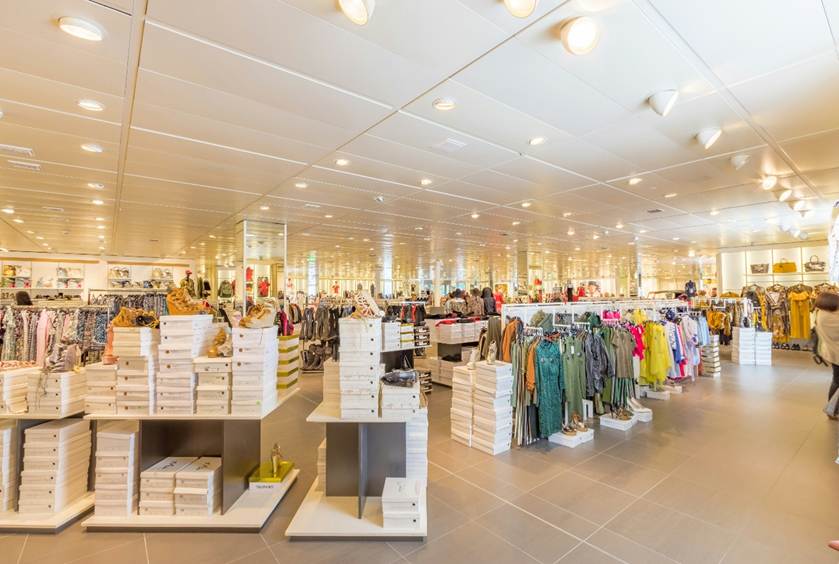
This quote says it all for me. So, I guess I am not trendy!! Yet we live in a society that judges us by the way we look. It is very tempting for us to wear a fast-changing fashion selection. Especially if it is cheap, cool and up to date! (Zara changes its range once a week!) We can easily change our wardrobe frequently, if we choose. We can have regular shopping expeditions with our friends, wow our partners and keep our bank manager happy if that is important to us.
What is Fast Fashion?
According to McKinsey “Fast Fashion has a focus on ultralow prices and condensed production cycles, fast fashion gets new styles to customers at a record pace.”
Their quote continues, to say “it (also)creates sizable environmental and social challenges.”
So, here is a difference we can all make!
The Environmental Impact of Fast Fashion
According to this article “The fast fashion industry is a significant contributor to the climate crisis, responsible for as much as 10% of global carbon dioxide emissions.”
According to another article, the situation will get much worse if we carry on as we are now: “If current trends continue, its greenhouse gas (GHG) emissions are projected to increase by over 50% by 2030.”
Apart from the industry producing large quantities of carbon emissions and thus contributing significantly to global warming, it adds to the planet’s environmental challenges in other ways.
1 Textile Waste
Fast Fashion Means Fast Turnover
(Western ‘Fast Fashion’ That Pollutes African Beaches)
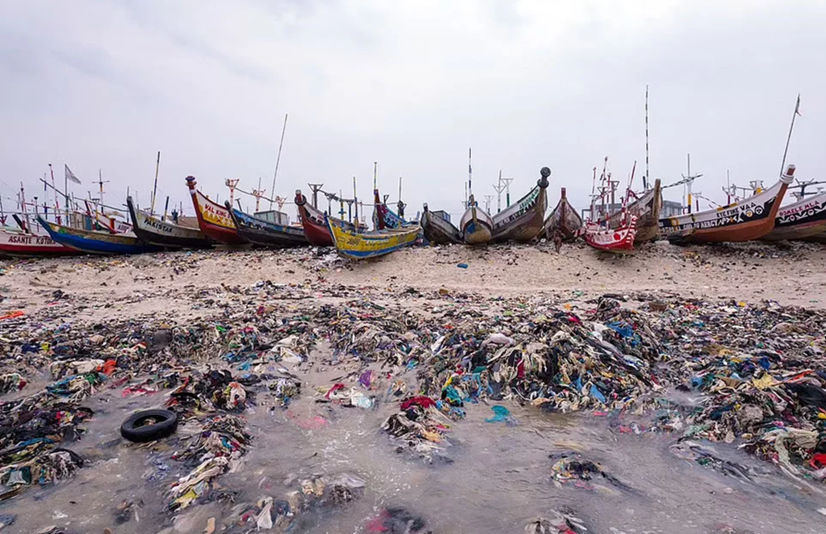
Earth.org shows that of the 100 billion garments produced each year, 92 million end up in landfills! I find it hard to get my head round that.
They say also that as well as being a huge source of water pollution, fast fashion contributes to vast quantities of water being wasted each day. Apparently about 2,700 litres of water are needed to make one t-shirt. See my blogs “Our Most Precious Resource” and “When the Well is Dry”.
The worst aspect of this throw-away culture is that the enormous majority of clothes being thrown away each year are not recycled. It seems they are made from a complex mixture of materials that are hard to recycle.
2 Microplastics
These clothes are a huge source of microplastics, and it appears that they produce the equivalent of the pollution of 50 billion plastic bottles in the ocean each year. An article by the EU shows that microplastics are found in the air, water and soil, entering the food chain and accumulating in living organisms. (Microplastics have been found in 75% of human breast milk samples.)
3 Contamination of African Conservation Areas
The West (principally the UK) is exporting its discarded Fast Fashion garments to Ghana in Africa where they are then dumped in protected wetlands, says Unearthed.
Ghana imports about 15 million discarded clothing items each week. About 40% of the garments are unfit for use so they are just dumped. (The rest provide jobs for garment traders.) The waste causes an influx of mosquitos and local flooding.
This area protects rare birds and turtles, and as well as harming the animals and birds, the dumping is causing many problems for the locals.
The Human Toll of Fast Fashion
While it is not environmental damage or a contribution to Climate Change, working in this industry can be very difficult indeed. The organisation Earthday.org has looked at some of the drawbacks. It is worth looking at their article before buying any more cheap t-shirts!
They say, “In pursuit of the latest trends, we often overlook the true cost of fast fashion – a cost paid in sweat, suffering, and silenced voices of garment workers across the globe. Millions of workers are trapped in a relentless cycle of exploitation, fuelling an industry that depends on their labour but ignores their rights. “ Apparently the industry employs more than 60 million people worldwide. Less than 2% earn a living wage.
Women form the largest percentage of garment workers and, according to the report, “Gender discrimination is pervasive in all countries where garments are produced. Women are frequently subjected to verbal and physical abuse, as well as sexual harassment, often in unregulated factories where workplace violence goes unchecked.”
If you are interested in fast fashion, it is well worth having a look at this report. It shocked me.
Can You Make a Difference?
Is This the Answer?

What can you do to protect the climate and environment from the ravages of Fast Fashion?
1 Buy a few items of expensive clothes and make them last a very long time.
Obviously, purchased designer labels are not going to be thrown away often, so at least that would cut down on waste and carbon emissions.
2 Also expensive, but better, are items of sustainable fashion brands that work hard to make their clothing planet-friendly. For example one brand uses bacteria-grown leather, another has committed to cut its greenhouse gas emissions by 50% by 2027, and so on. Vogue has produced a list of 28 of the best affordable and sustainable brands.
Clearly these brands are good/goodish but likely to be expensive and thus not necessarily appropriate for young people with small incomes. They may also be harder to find. However, just like organic food some years ago, if we keep asking about it, the market will produce more brands that care and prices will go down.
Other Ideas
3 Buy Less: buying new clothes doesn’t make us happier.
4 Support Charity Shops
Charity shops in the UK are relatively easy to find. I have found it a bit more difficult in Europe but there is always Emmaüs. It appears that Thrift shops in America sell good quality fashion but I can’t vouch for that. Another benefit of charity shops is that if you take clothes you are finished with into the shop when you want to buy something, it becomes circular fashion. (A more sustainable approach where clothes are kept in use for a long time, thus minimizing waste and pollution.)
5 Don’t throw out the clothes you no longer want!
- Think of repairing them.
- Pass them on to friends who may want them.
- Sell them on a second-hand app.
- Some shops take back clothes from their own, or other brands.
- Put them in a textile re-use bin.
6 You can buy second-hand clothing, swap or rent different clothes or even clothes for a special occasion. All these ideas come from a site called Sustain Your Style.
There are many things we can do to make a difference
The first thing we can do about the ravages of fast fashion, or any fashion at all really, is to stop and think “Do I need this?” “Can I make a difference to the world by not buying this new item of clothing?” “Is how I act more important than what I wear?”
If we must have a new dress/t-shirt/outfit is there a better way of acquiring it?
Fast Fashion is an important and growing threat to our world. Fortunately some companies at least are beginning to recognize that. We can help by supporting them, buying less and thinking about other countries that we are damaging in our urge to be up to date.
Here is a difference we can all make.
If you are not yet on my mailing list and wish to be on it, please use the form on the Home page, this will help our administration and ensure you receive your own copy.
Photos by Alexander Faé on Unsplash, by Muntaka Chasant and by Cesar La Rosa on Unsplash
Thank you Doreen. This is such a good reminder of Quaker behaviour over the past 450 years! Just look at Kellogs packets. People used to laugh at our old clothes and fashion and we were recognised often by our elderly hats and coats.
These days let’s go for real best wool or real cotton without plastic thread. As I get older I find that clothes that I have had for many decades are now too big and heavy, so for the past couple of weeks I am preparing a large pile of my good strong clothes for a group of young French Catholic friends to ðistribute locally. They know who needs them.
How interesting George, thank you. I wonder if there is a history book that describes all that?
I think I must have been a Quaker in some past life! I keep looking at photos from 40 years ago and
thinking, gosh I am still wearing that jumper or jacket etc!!
I can understand things now being too heavy for you. One occasionally sees an old Harris tweed jacket
and you are right they are very heavy. But boy do they last a long time.
We have an Emmaus near us and so many clothes have been thrown out. I guess that there are also
so many people that need them.
Hope you are keeping well. D
Very interesting article. Thank you
Thank you Caroline. I found some of the facts quite scary. It all seems quite crazy!!