
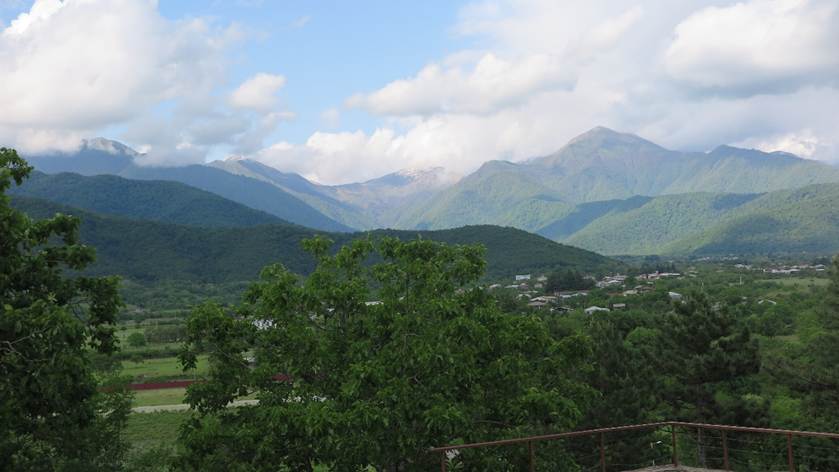
As the song goes: “This land is your land – – This land is my land – – This land is made for you and me!” That tells me we have some responsibility to care for it.
Mankind has long prized the land for the many bounties it offers. It feeds us, gives us fresh water, the ability to graze our animals, allows us to build homes and offers the joy of wilderness and its ability to restore us. In the present day when our carbon emissions are so high (and causing dangerous Climate Change) the land is important for the absorption of carbon dioxide from the atmosphere (for example in forests and peat bogs). Increasingly we also need land for our renewable energy production from solar and wind.
But our population is expanding and needs to be fed. An article in the Anthropocene Magazine asks “Is there enough land on Earth to feed the world and to store carbon?”
Are we caring for the land we have?
Unfortunately we have not been good stewards of our land. We have chopped down our forests, misused our underground water, dried out our peat bogs and created deserts with our over-use of fossil fuels. We have built great cities to house our increasing population, poisoned the soil with our industrial agriculture, and grazed our ever-increasing number of domesticated animals. The amount of land we have available and healthy is decreasing while our population increases.
It is important of course in all this to leave space for the wild animals that help keep the planet healthy.
An organisation called fahlo writes that “A balanced animal ecosystem is indispensable to the survival of our planet. Through their roles as pollinators, predators, and prey, they ensure the survival and health of the natural world.” We are driving animals and insects to extinction with our lifestyles of consumption so we must do what we can.
The reason we treat our land so badly was clear to Aldo Leopold (an American conservationist) “We abuse land because we regard it as a commodity belonging to us. When we see land as a community to which we belong, we may begin to use it with love and respect.”
Are we using our land with love and respect?
Well, some of us are. For the rest, it appears to me we are still trying to make a profit from it. Let me show you some examples.
1 The use of pesticides
A recent article in the Guardian newspaper discussed the use of pesticides on British food. They discuss a report by Greenpeace which talks about the use of pesticides on a typical Sunday roast dinner. Apparently, there may be as many as 100 of the toxic chemicals in the meal. “Our countryside is being drenched in pesticides, with devastating consequences for bees, birds, butterflies, rivers and the soil,” said Nina Schrank. Nina is a senior campaigner at Greenpeace UK. “Fields that once hummed with wildlife are falling silent while agrochemical giants rake in enormous profits and farmers are trapped in a costly cycle of chemical dependency.” The extensive use of pesticides is devastating the natural world, according to Greenpeace’s report. “The signs of nature in decline are everywhere,” it said, pointing out stark declines in birds, butterflies and hedgehogs.
2 The way we use and abuse our land
An article released by the BBC referred to a land report by the UN’s IPCC and its international scientists. In it they discussed a number of ways that we abuse our land:
- The scientists warn of a battle for land between multiple competing demands: biofuels, plant material for plastics and fibres, timber, wildlife, paper and pulp – and food for a growing population.
- Our hunger for red meat is putting huge stress on the land to produce animal feed, as well as contributing to half of the world’s emissions of methane – another greenhouse gas.
- The way we farm and grow timber often actually increases emissions of carbon dioxide.
Peat Bogs Can Be Rich Carbon Sinks
3 Loss of Peatlands
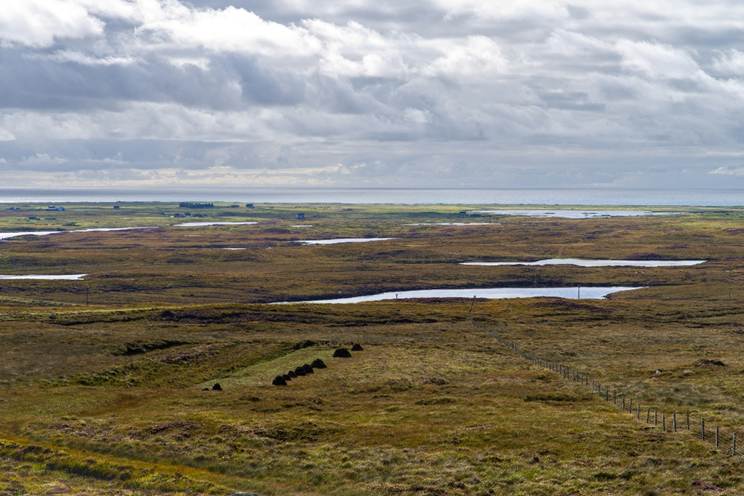
NatureScot says peat bogs play a crucial role in the Carbon Cycle. Peat bogs in good condition have the potential to offer a significant nature-based solution to tackling climate change. Apparently “as peat is formed in waterlogged conditions, it is hard to disturb, making it a very efficient carbon sink. However, if you drain or burn the peat, the balance is disturbed.” Unfortunately, farmers find drained peat bogs very rich in nutrients for their crops. They are thus quite reluctant to return the soil to previous wet conditions. This allows considerable amounts of carbon to re-enter the atmosphere.
These are only a few ways in which we misuse the land we have. There are very many others.
Are we doing anything to keep our land healthy?
Is there enough land on Earth to feed the world and to store carbon? To return to the question from Anthropocene Magazine above, it looks to me as if their answer (which is “yes”) is really “yes – – – but!” Do read the article: it is a little complicated to describe here because of lack of space. However, while welcoming their results, I have several points I would like to make. Firstly they have set their research on aiming for an increase in temperature of only 1.5°C (we may well be past that number now). Secondly they have not spoken about the loss of fertility of crops at a higher temperature. Nevertheless they have said “The novelty of our study is in providing a clear message that it is possible to fit the land for major human needs, while protecting and restoring land.” Let’s hope so.
What else is being done?
On researching the answer to this question I have found that some of our land problems are being tackled directly.
Brazilian Rain Forest
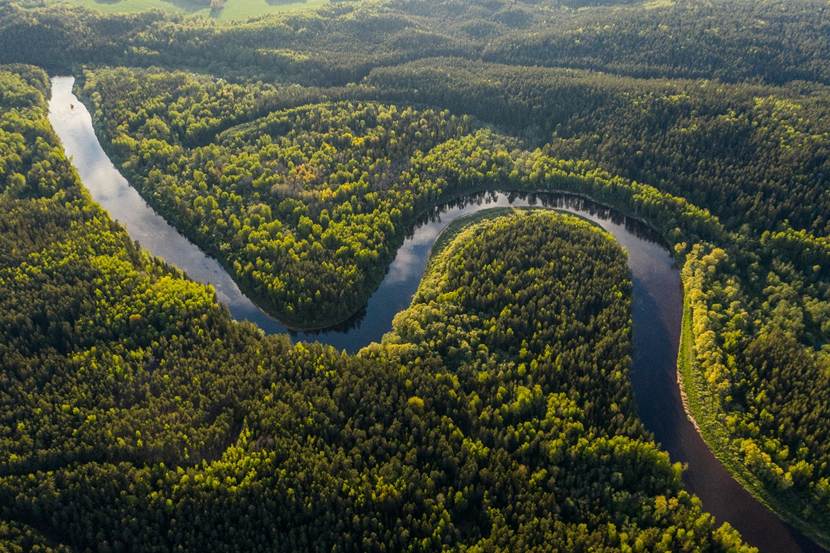
- A recent Guardian article on Brazil’s Atlantic Forest shows the lowest deforestation rate in 40 years. Another article tells of the Amazon (a separate ecosystem) showing a 68% drop in deforestation in 2025. (Although these rates may be threatened by new political parties gaining power in the region.)
- Mongabay has written about Colombia banning all new oil and mining projects in its Amazon. The Colombian environment minister said, “We do this not only as an act of environmental sovereignty, but as a fraternal call to the other countries that share the Amazon biome, because the Amazon does not know borders and its care requires us to move forward together.”
- This next one, for me, is perhaps the most exciting piece of news. A conference was recently held in Colombia (co-chaired by the Netherlands) on transitioning away from fossil fuels. The Guardian newspaper reported that with the first ever conference on “transitioning away from fossil fuels”, the host joined nearly 60 countries (with almost half the global GDP) determined to loosen the grip of petrostates on the world’s future. That is a lot of people who insist on fighting Climate Change. The fight of course is only just beginning, but it is a very important start.
- California’s Yurok Tribe have recently had about 47,000 acres of their land returned to them after 120 years. They obviously have a deep spiritual connection with their land and will care for it like it deserves.
What can you do to care for our land?
- Campaign for a return to Regenerative Farming
- Eat less beef
- Eat more plant-based food and less meat
- Make your own compost if you are lucky enough to have a garden
- Don’t use pesticides
- Do your best to fight Climate Change in general – i.e. cut down on flying, buy an electric car if you can, think about solar panels or joining a community energy scheme, buy a bicycle, take more public transport and so on.
This beautiful land that we have is on loan to us till it is time to pass it on to the next generation. We must love and care for it. If we do not, our children and grandchildren will struggle to make a life for themselves.
If you are not yet on my mailing list and wish to be on it, please use the form on the Home page, this will help our administration and ensure you receive your own copy.
Photos by Doreen Hosking and by Pix Tresa and Ivars Utināns on Unsplash