
A Long Wait
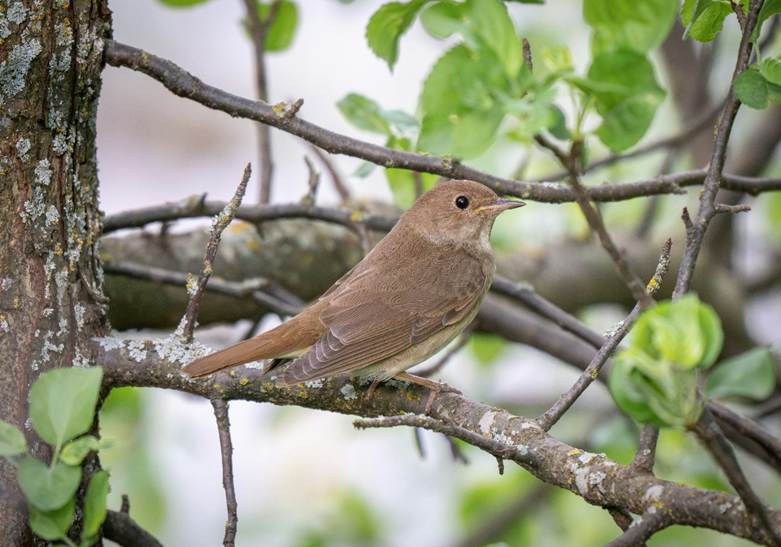
I have been longing for many years to hear the song of a nightingale. People say that it is something very special indeed. Today I achieved my goal. A friend had recommended that we connect to an App called Merlin. This wonderful App identifies bird calls on a phone, so walking in the woods has become a very special joy. We are on holiday in the Dordogne in France and our black labrador loves walking among the trees. Eh voila! (as they say here) there was a much-anticipated nightingale on our walk, singing his heart out.
Yes, it was special, after all it is not every day one hears a nightingale. (Only the male sings.) His range and variety were impressive and he certainly had enthusiasm. It seems that the song is even more beautiful at night when he is looking for love. So I felt privileged. In England these birds are disappearing at an incredible rate. Seemingly about 90% of them have been lost because of Climate Change and loss of habitat.
Nightingales are small brown birds, slightly bigger than a robin. There is nothing particularly special about their looks, but – oh boy – when you hear the male sing, Wow!
How are nightingales doing globally?
Birdlife International says that globally nightingales are doing fine. However their state of the world’s birds report “paints the most concerning picture for the natural world yet, with nearly half of the world’s bird species now in decline.” They say, “nearly three billion birds are estimated to have been lost since 1970 in North America alone, and a further 600 million have been lost in the European Union since 1980, an area five times smaller.”
Reasons for bird loss generally
The birdlife report discusses in more depth the reasons for our dramatic loss of birds “Across the world, birds are impacted by an array of different threats, nearly all of which are caused by human actions. Agriculture – both through its expansion into important habitats, and the increasing use of machinery and chemicals as it intensifies – is the leading threat to bird species, impacting at least 73 per cent of threatened species.” Obviously, there are more threats which you can read about for yourself, but the CEO of Birdlife says that “birds tell us about the health of our natural environment.”
You can imagine that our environment is really pretty sick at the moment!
I care very deeply about the health of our natural environment and the way we are treating Nature and our wildlife. At the moment, I am appalled at our stupidity.
The LSE School of global sustainability shows how closely linked loss of Nature and Climate Change are, and how we need to deal with both of them together. They say “Human activity has significantly altered natural environments in all parts of the world and contributed greatly to the stock of greenhouse gas emissions in the atmosphere… It has also limited the ability of natural systems to absorb and store, or sequester, carbon from the atmosphere and for natural features such as coral reefs and mangroves to protect communities from the increasingly severe impacts of climate change.”
It is not just birds we are losing but wild animals, insects, plants and fungi, and the ecosystem services these creatures provide for humanity.
Ecosystem Services
Nature Scot shows us that Nature provides many of the things we need to keep humanity alive and healthy, for example fresh water, clean air, medicine and food.
Another name for the production of these offerings is ecosystem services. These are carried out by ecosystems.
Ecosystems
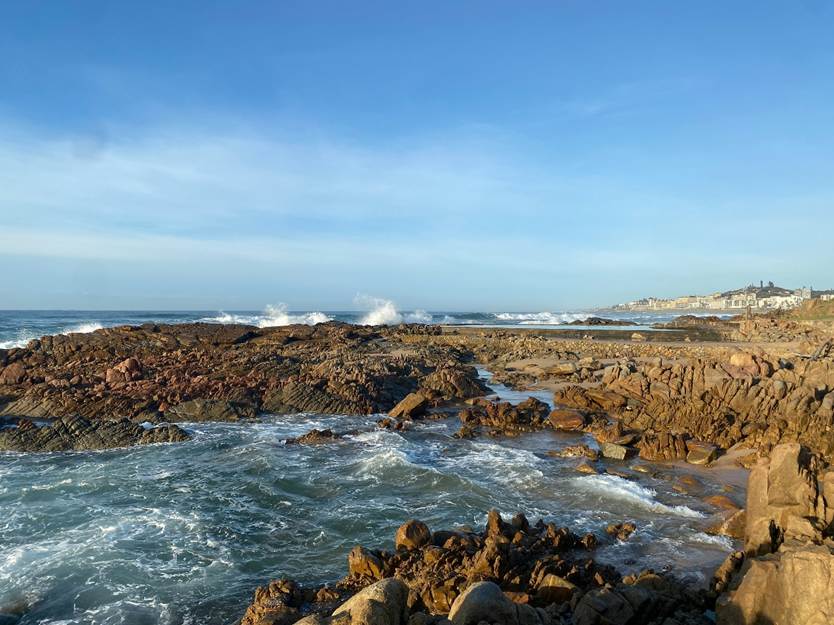
An ecosystem is a geographic area where living organisms (plants, animals, and microorganisms) interact with each other and their non-living environment (soil, air, water, climate). An example of this would be a rock pool. Rock pools serve as biodiversity hotspots, teeming with an abundance of marine life that includes a variety of plants, invertebrates, and fish species. They often serve as protective nurseries for younger sea creatures. Other examples are coral reefs and rainforests.
A Rock Pool
Our changing lifestyles are causing devastation to our wildlife and to the life-giving “services” they offer us. For example the loss of nightingales in England is caused principally by changes in land use such as urbanisation, monocultures in farming and deforestation.
WWF’s Living Planet Report tells us that over the last 30 years our wildlife populations have shrunk by 73%. The creatures we are losing are not just pretty or majestic to look at but are often major contributors to a healthy and economically beneficial lifestyle for mankind.
For example coral reefs provide nurseries for young fish. A recent NOAA report shows that “worldwide, an estimated one billion people benefit either directly or indirectly from the ecosystem services coral reefs provide.” This includes the 500 million that need healthy reefs for food.
Another group of creatures we are losing are the pollinators, bees, butterflies and so on. Obviously, they are critical both to our food production but also to the health of our wild plants.
What are we doing to improve the situation?
Rewilding
The LSE states that “Rewilding is an approach to large-scale nature restoration and conservation that aims to reinstate natural processes and sometimes ‘missing’ species into landscapes that have been managed and/or degraded by humans, and in so doing, ensuring the richness of ecosystems is restored alongside resilience to drought, flooding and other severe weather events.”
“Key principles of rewilding usually include protecting and reintroducing keystone species (that help manage the entire ecosystem), removing invasive species, ending damaging practices such as deforestation or wetland draining, and restoring degraded landscapes.” Examples of keystone species can be wolves, beaver and European bison. Do have a look at this wonderful video on the re-introduction of wolves to Yellowstone National Park.
There are many amazing results coming from rewilding worldwide. If you want to know more about this, see my blog Nature Needs our Help.
Removing Invasive Species
Invasive species are animals or plants brought (often in error) to a new environment where they have no natural predators. Often, they are much hardier too and thus they wipe out the native species. Examples of these are Asian carp, zebra mussels, cane toads and the common rabbit.
Nature Scot has an ambitious plan to remove some invasive species from Scotland. These species are increasing on land and in freshwater and seas, affecting important ecosystems like islands, temperate rainforests and peatlands, and iconic species such as puffins, water voles and red squirrels.
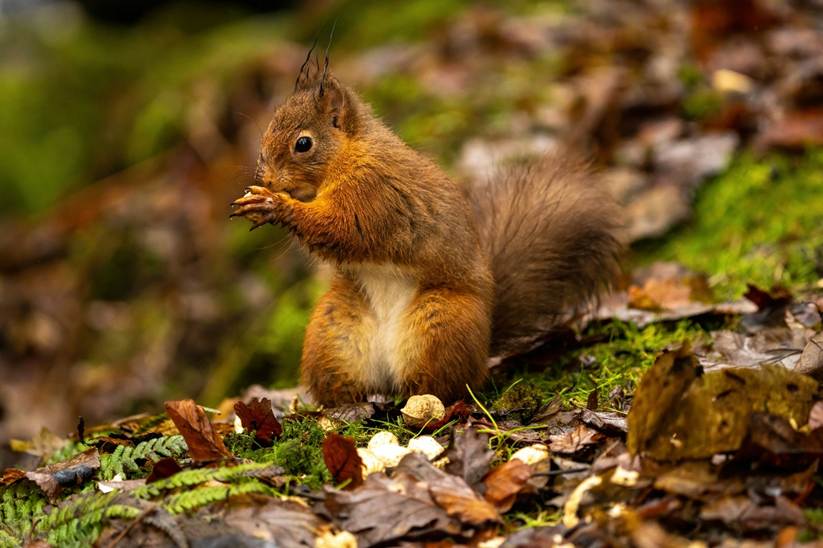
Scottish red squirrels are under threat from imported grey squirrels that carry a virus deadly to the reds.
A team of volunteers and helpers are monitoring the numbers, alleviating the impact of the virus and assisting in fighting the spread of the grey squirrel.
A Red Squirrel
Urban Rewilding
Here are some lovely examples of cities which have chosen rewilding projects to increase their sustainability:
London, UK:
- London has launched several rewilding projects, including the creation of new green spaces, the introduction of beehives and bird boxes, and the planting of wildflowers and other native species.
Barcelona, Spain:
- Barcelona has created a network of green corridors that connect parks and other green spaces throughout the city. The corridors are planted with native vegetation and provide habitats for wildlife such as birds, butterflies, and bees.
Detroit, USA:
- Detroit has launched several rewilding projects, including the creation of a 22-acre urban forest in the heart of the city, the planting of native species in vacant lots, and the restoration of natural habitats along the city’s rivers.
Melbourne, Australia:
- Melbourne has launched several rewilding projects, including the planting of native trees and vegetation in urban areas, the creation of wildlife corridors, and the restoration of natural wetlands and other ecosystems.
Other cities have gone for rewilding old industrial sites, water management, community involvement and recreational possibilities. It is just amazing what is being done.
The Amur Leopard
The Amur leopard (an apex predator) is critically endangered. However a co-ordinated conservation corridor built between Russia and China has recently allowed a satellite-collared Amur leopard to cross a river basin connecting the two countries and allow it to expand its range and its possibilities of finding a mate. It also showed the researchers that their anti-poaching operations and habitat restoration efforts have been successful.
What Can You Do?
There is just so much that individuals can do – even better if you can do it within your own community.
- Buy organic food
- Help fund rewilding projects
- Check at the garden centre that you are buying native plants
- Use only natural pesticides and compost
- Cut down on buying beef to avoid deforestation
- Be careful choosing your fish – only buy fish marked the Marine Conservancy Council in the UK. Other countries have their own way of fish labelling.
- Eat less fish anyway
- Protect the birds in your garden, put a bell on your cat and feed them in winter
- Ask your local council, if they don’t do it already, to cut down mowing of hedgerows
- Don’t cut your hedges till after the nesting season
- Do all you can to help fight Climate Change.
Please help save my nightingales, bees, butterflies and red squirrels. We need them all and more. A world without the sound of animals or the wind in the trees would be a very alien land indeed. I don’t want to leave that to my grandchildren. I imagine you don’t either.
If you are not yet on my mailing list and wish to be on it, please use the form on the Home page, this will help our administration and ensure you receive your own copy.
Photos by Andrey Strizhkov, Derek Crosson and Jonny Gios on Unsplash