
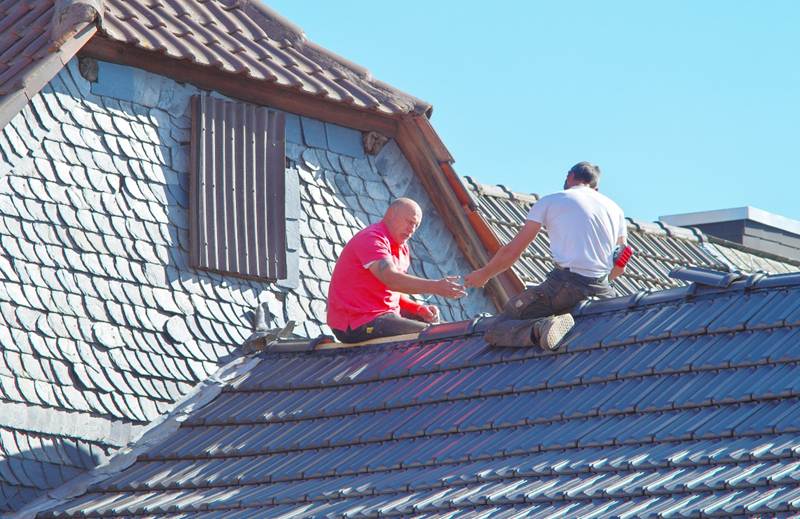
“The time to repair the roof is when the sun is shining.” – President John F. Kennedy
Whatever happens in the future, our climate has changed. The carbon dioxide in the atmosphere created by our long-term burning of fossil fuels will be there for a very long time. It may be there for hundreds, if not thousands of years. If we succeed in cutting our use of fossil fuels quickly then the temperature is likely to continue to rise for a few years, or possibly decades. After that it should stabilise but will not go down to previous levels. There will still be too much carbon dioxide (and other Greenhouse Gases) in the atmosphere. We need to prepare our world for a different future.
If this seems a bit complicated, have a look at one of my earlier blogs called The Science of Climate Change.
Can we fix that?
At the moment we do not have the technological capability to take the carbon dioxide out of the air, in spite of what our political propoganda. That might come in the future but right now all we have is natural solutions. That includes planting trees, restoring mangrove swamps, wetlands, sea grasses, peatbogs and so on. This will make a difference but may well not be enough.
So are we prepared to live with higher temperatures?
The short answer to that question is NO. The longer answer to that question is still NO. However it is probably NO, but – – – – . Many people are thinking about it and some groups, towns and cities are beginning to make changes that will make our futures more agreeable. Globally though, we have not done enough. This is partly a question of political will, and partly an unwillingness to fund the future.
Let’s look at that situation
WWF looks at two things that can be done in the fight against Climate Change.
We can have Mitigation and Adaption.
Mitigation according to them means “avoiding and reducing emissions of heat-trapping greenhouse gases into the atmosphere to prevent the planet from warming to more extreme temperatures.” This is something where we can all make a contribution.
Adaption means “altering our behaviour, systems, and—in some cases—ways of life to protect our families, our economies, and the environment in which we live from the impacts of climate change.” Here too, we can contribute.
Mitigation
I have discussed Mitigating Climate Change many times in my blogs. There are hundreds of different things we can do. This ranges from giving up the use of fossil fuels to changing our meat-eating habits, working to restore our biodiversity and ensuring the government knows your opinion on climate action. The Grantham Institute has some interesting ideas about how we can get involved in Climate Mitigation.
Adaption
I really wanted to talk about adaption in this blog. There are some very forward-looking ideas out there already making a difference. This is good because we are going to have to find a way to live with the extra heat (and its consequent problems) which we have created. But it is also good because we are already finding ways to create a better future, some of them very clever.
It would be wrong to say that the world is totally on board with this. Nevertheless, imaginative changes are happening, and with your encouragement could happen faster. These two concepts are interlinked. If we do one it will help the other.
Greening Cities
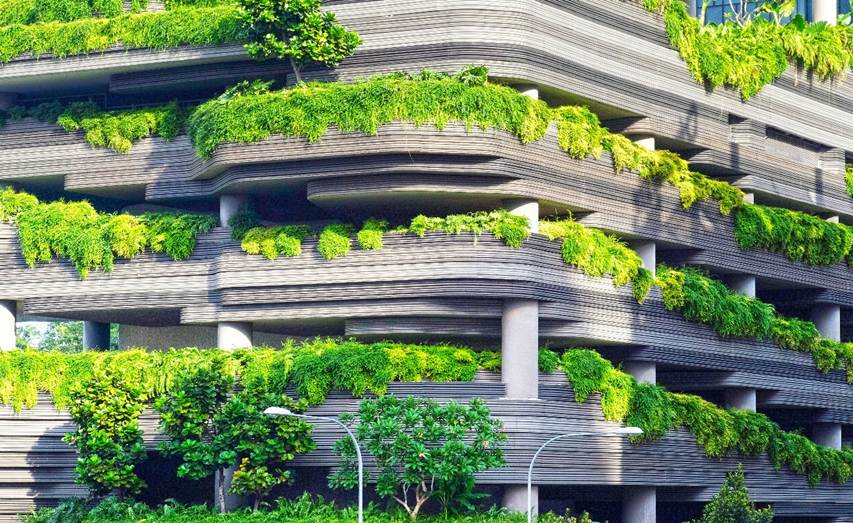
As the world heats up, and we face more floods, storms, heatwaves, droughts and weather that is hard to cope with, we must prepare, especially in our cities, for these unexpected events. (In 2050 68% of the world’s population is projected to live in cities.) As President Kennedy said: “The time to repair the roof is when the sun is shining.” In other words, we need to prepare ahead, before things get really difficult.
We can be sure that in some places it will be hot. For example, temperatures in Pakistan in summer at the moment can reach over 50° Celsius. Even here, where I live in the south west of France it can be 38° some days. I find this exceedingly unpleasant. It may be horrible for me, but it is so much worse for people who work outside like farmers or builders, especially when it is humid.
Other countries and areas may be threatened by challenges like sea level rise, soil degradation, violent floods or lack of water.
Challenges that the world is likely to face
- Extreme Heat
The threat to life for human beings from very high temperatures, especially when it is humid, is considerable. The World Health Organisation reports that heat stroke can have a very high fatality rate. They continue to say that “The number of people exposed to extreme heat is growing exponentially due to Climate Change in all world regions.”
However they also say “Practical, feasible and often low-cost interventions at the individual, community, organizational, governmental and societal levels can save lives.” In other words we can adapt the environment to make life more comfortable and the loss of life less likely.
The C40 Cities have an interesting article on adapting to extreme heat. They say that “Heat is among the deadliest climate related hazards.” And they also say “Heatwaves are predictable, and their negative effects are preventable.” What both these articles tell me is that yes, the threat of loss of life can be high in heatwaves. But we can prepare and we can reduce that threat, now and for the future.
- Flooding
UKGBC (United Kingdom Green Building Council) asks “How can we build a flood-proof city?”
They say “One of the biggest contributors to surface flooding in our cities is urbanisation, and all of the concrete, asphalt and paving in our infrastructure and buildings. These surfaces, unlike the bare earth, don’t absorb water but instead repel it. This means that water cannot easily drain away, and all rain that does fall must enter the sewage system. This can lead to the drains becoming overwhelmed and flooding occurring.”
Their thoughts on this include:
- Building permeable paving – See Sponge Cities
- Bringing nature into the city – i.e. planting more trees, having more bare-earth spaces, increasing biodiversity
- Put in Sustainable Drainage Systems, i.e. rain gardens, ponds and wetland areas and green roofs.
- Making changes to buildings
- Restoring marshlands on the coast
- I really want to say here, “release more beavers!” to slow water flow and all the other wonderful things they can do for biodiversity
There are of course other challenges which I don’t have space for right now. I would, however like you to bear in mind that there are many things we can do to be better prepared for the future.
Examples of preparation already in place
- Allowing Nature its place
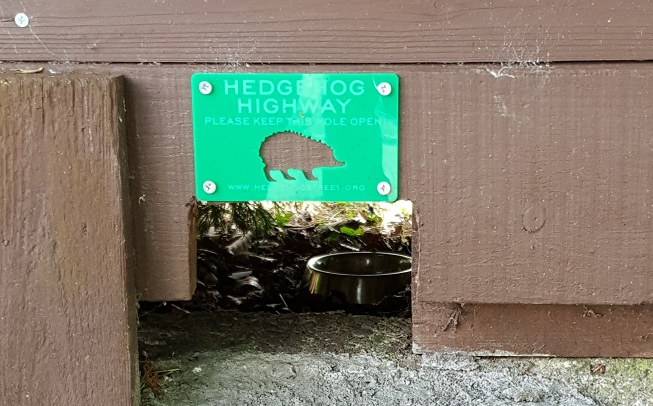
For example, hedgehogs in our cities increase biodiversity in a number of ways, but our fenced gardens are not hedgehog-friendly. In the UK all new-build houses must have hedgehog highway gates in their gardens.
London, which is often recognised as one of the worlds greenest mega-cities now has more than 30 pairs of peregrine falcons living and breeding in the city. They help to keep the pigeon and starling population under control and balance ecosystems.
An organisation called Trees for Cities talks about how planting trees in cities can make a huge difference in how the population experiences heat in the city. “Trees work wonders by reducing temperatures on hot days. Heat maps show that across 5 major English cities, areas with more trees and green spaces are up to 5 degrees cooler. The Food and Agriculture Organisation of the United Nations states that strategically planted urban trees can cool the air up to 8 degrees.” That is quite a difference!
- Stormwater Management
An IMF blog talks about flooding management in Kuala Lumpur in Malaysia. They have built a three level tunnel that carries traffic on the top two levels. These will be used as storm drains in the case of flooding. “This tunnel is expected to prevent more than $1.5 billion in flood damage and reduce the costs of traffic congestion by more than $1 billion over the next 30 years.”
- Problems with Drought
Some days I just want to cry at the sheer wonder of ideas that people come up with to make this world a better place. This is one of those ideas.
The University of Namibia along with a water technology company called Solar Water Solutions has just launched a solar-powered desalination plant that is designed to be used, among other things, to produce water to grow trees which are intended to take carbon dioxide out of the atmosphere. Namibia, in sub-Saharan Africa, is an exceedingly dry place and one of the countries hardest-hit by Climate Change. This idea is intended to increase food security, increase energy supplies and mitigate Climate Change. At the moment this is an on-going research project which clearly has a lot of potential.
Be Encouraged
We have neglected and abused our world. But I hope I have shown that with thought, finance and a great deal of help from Nature we can make our future lives work better.
Your job including helping to fight Climate Change and Loss of Biodiversity, is to get your politicians to act, to fund adaption in areas where it is sorely needed and to pass on the news that we can make a difference if we act.
Thank you.
If you are not yet on my mailing list and wish to be on it, please use the form on the Home page, this will help our administration and ensure you receive your own copy.
Photos by Immo Wegmann and Danist Soh on Unsplash, and courtesy of Hedgehog Street
Thank you Doreen for the time and effort you put in to these important blogs. I am aware I have not responded personally for a while but I do read them and am in total support of your hard work and research and when appropriate I share them with others.
We are indeed living through challenging, dangerous and unpredictable times not just for our planet but for the future of our children and society as a whole.
Thank you, don’t lose heart, keep going, you have many supporters. Best wishes,
Margaret
Thank you Margaret for your encouragement. I appreciate it.