
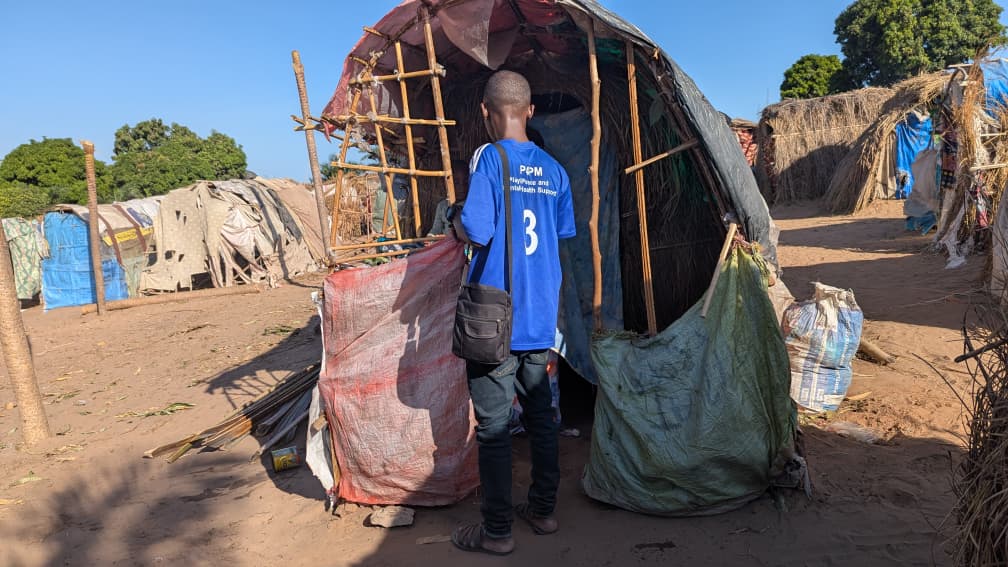
The Encyclical by the late Pope Francis, Laudato Si, not only revealed his care for the Earth but according to Susan Holmberg of the Roosevelt Institute it showed that “The most consistent and profound message threaded throughout Pope Francis’s text is how disproportionately vulnerable the poor are to the escalating effects of climate change.” This is true. However at the same time she says “it is important to point out that the relationship between the economy and the environment goes both ways … high economic inequality … is also bad for our environment” (and thus Climate Change.)
Therefore as my title says, “We can’t solve Climate Change without fixing Poverty”.
=> Poverty contributes to the creation of Climate Change.
Where Does Extreme Poverty Come From?
In a post on LinkedIn, Olivier de Schutter, Special Rapporteur to the UN on Extreme Poverty, said, “I would like to share a simple reflection: poverty is not inevitable, it is manufactured. And if governments can manufacture poverty, they can also dismantle it.”
Let me repeat that: POVERTY is not inevitable, it is manufactured!
So who is manufacturing it?
It might perhaps be more exact to say that extreme poverty is not directly manufactured, but is exacerbated by factors like discrimination, inequality, lack of education, conflict, Climate Change etc, all of which limit people’s access to basic needs and which traps people in poverty.
However, I agree with Olivier de Schutter. I believe that most of those factors, perhaps all, are created by the unwillingness of people with money, or power, or both, to help others. For me, the societies of the “rich world” contribute massively to the production of poverty, not just in the world of developing countries but also in our own.
A Centre of Power
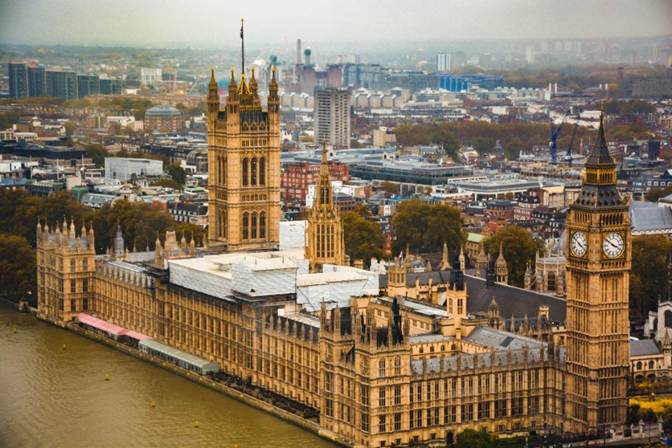
Examples of harming our own countries are to be found in Wikipedia, which shows “that America had 37 million people defined as living in poverty in 2023. This is 11% of the population.” The UK has around 14 million people living in relative poverty (21%). I should emphasise that for most of these people (especially in the UK) there is some help. It is not at all like living in the extreme poverty that is found in parts of India or Africa. There people are dying of starvation. It is just not much of a life!
People living in poverty in developed countries are still making their own contribution to Climate Change. Even if it is because they have no money to change to a more sustainable way of living. If they drive they are probably driving petrol or diesel cars. They are likely to be using energy from fossil fuels and eating food transported long distances because it is cheaper and so on. There is absolutely no judgement in these comments. When people are struggling to make a life, it is hard to change.
The rest of us aren’t very good at it either!
How much responsibility does the government have for this?
Hub sociology says “Despite being one of the richest nations in the world, the United States continues to experience widespread economic inequality, housing insecurity, food shortages, and limited access to quality healthcare and education.” The present US government has a large responsibility for these issues because of their policies.
What is the Global North doing to create Poverty in developing countries?
We and our governments have considerable responsibility for poverty in developing countries. Here are a number of ways that make it hard for them to develop and certainly to mitigate and adapt to Climate Change.
1 Colonialism
India under the Former British Raj
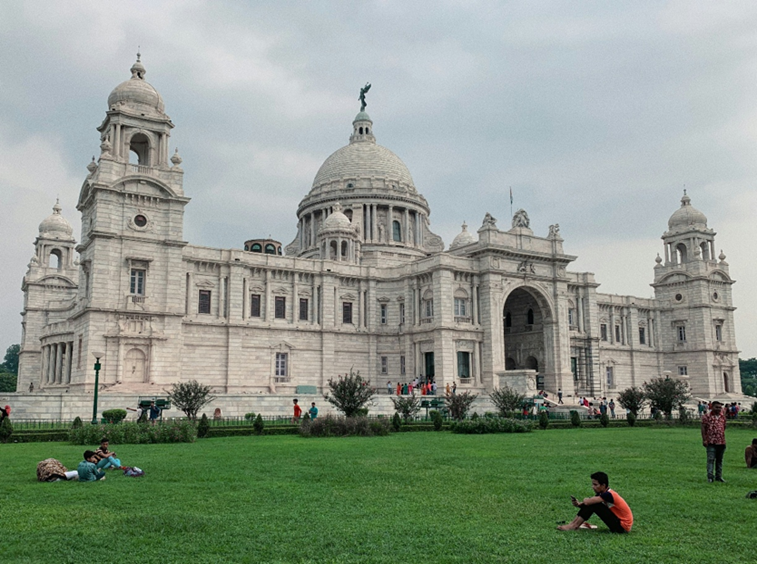
Oxfam shows in a report called Takers not Makers: the unjust poverty of unearned wealth and colonialism, “Our deeply unequal world has a long history of colonial domination which has largely benefited the richest people. The poorest, racialized people, women and marginalized groups have and continue to be systematically exploited at huge human cost.” It continues, “Today’s world remains colonial in many ways. The average Belgian has 180 times more voting power in the World Bank than the average Ethiopian.”
Currently the system extracts wealth from the Global South to give US$30 million an hour to the richest 1% in the Global North!
2 Debt
An organisation called Development Aid says “The external debt of developing countries has reached unprecedented levels, having surpassed $11 trillion in 2023. The growing burden of debt servicing, exacerbated by high global interest rates and economic slowdowns, is putting pressure on national budgets and threatening developmental progress.”
This increases poverty by diverting funds from essential services such as healthcare and education and reducing investment in poverty reduction. Borrowing costs (see below) are much higher for developing countries.
3 Government Aid
America has drastically reduced foreign aid. It has cancelled USAID and slashed its $40 billion budget, leading to closures of critical health and nutrition programmes worldwide. A recent study after one year shows that the USAID cuts could lead to 9.4 million deaths by 2030. Other countries cutting their aid budgets include the UK, Germany and Canada.
4 Climate Adaptation Finance
The UNEP Adaptation Gap Report 2025: Running on Empty finds that “a yawning gap in adaptation finance for developing countries is putting lives, livelihoods and entire economies at risk.”
The cost of adaptation finance needed in developing countries will be US$365 billion a year. International public adaptation finance flows to developing countries were US$26 billion in 2023: down from US$28 billion the previous year. This makes adaptation financing needs in developing countries 12-14 times as much as current flows.
This is all quite complicated and to understand it fully, it would be important to read the report. However it is enough to say that countries are not getting enough finance to properly adapt to the problems of climate change.
5 Capital Costs on Borrowing for Developing Countries
The cost of borrowing for development in poorer countries discriminates against them. According to UNCTAD “government interest payments in developing countries rose 102% between 2014 and 2024. At the same time government revenues increased only 39%.” Governments of developing countries will struggle to adapt to climate change or better educate their school children, or just generally make their people’s lives better.
The Harsh Reality for Developing Nations
An article in LinkedIn by Alastair Caithness shows that “For many countries, the transition to renewables is neither feasible nor a priority. The immediate challenge is not carbon reduction but it is economic survival. With limited resources, nations face an impossible choice: prioritize slow, expensive renewable adoption or accelerate economic growth through fossil fuels.”
And further “The modern world operates on fossil fuels. From global shipping to industrial manufacturing, there are no viable large-scale renewable alternatives. Developing nations depend on coal to power their industries, build infrastructure, and elevate millions from poverty.”
So for developing nations in poverty their very lack of money ensures they continue to increase Climate Change through no fault of their own.
To ensure a better life for all of us we must help them adapt. We must find a way to reduce the barriers we have put on their development. And we must give them the climate finance we have promised them.
What does all this mean in people’s daily lives?
Government Aid, climate finance, foreign debt etc doesn’t mean much I imagine, in the lives of ordinary people. However lack of somewhere to live, not having adequate food for one’s children and listening to them crying with hunger, not being able to pay for their education and seeing no future for them are daily worries. For many women, childbirth has become frightening if things go wrong as there are now fewer trained doctors and midwives to help. Life in poverty is very hard indeed.
Is there anything we can do?
- We can donate money to individual causes.
Our friend Olo in the DRC, pictured above, runs an organisation to help women and children traumatised by the war. The DRC is very poor but sadly full of mineral resources that invading armies want to steal. He would love it if you helped him out.
Look at his organisation’s website from which you can donate directly: https://www.csc-drc.org/
- Similarly I have a friend Jefiter in Nigeria who helps girls stay in school and finish their education. I know she would love it if you helped.
Here is where you can donate to her organisation: https://www.globalgiving.org/projects/enrolling-and-retaining30-girls-in-school/?
These are our personal contacts. There are thousands more you could help. Each child educated and able to live a semi-normal life can contribute to a country’s development.
- You can write to your government to insist they increase their International Aid budget
- You can campaign for debt relief for poor countries
- You can join an organisation like Greenpeace who campaign for increased climate finance
- You can write to your government to get them to put pressure on organisations like the World Bank to change the financing system.
- You could write to the media to ask them to tell people the importance of agreeing finance for developing countries.
As always it is important to do something. Climate Change has no boundaries so if we help developing countries, that helps us. If we persuade governments to contribute to reducing poverty, it makes life much better for individual families but it helps us too.
If you want to be inspired to action have a look at the life history of Mia Motley, prime minister of Barbados and her advocacy for climate action and a new financial system to help poorer countries to adapt to a changing world.
Photos by Olo Byolenganya (CSC-Asbl, DRC) and by Paul Silvan and Bitan Basak on Unsplash
I would simply add one dimension that seems essential to me. Perhaps, beneath our economic and environmental crises, there is also a crisis in the way we see the world.
We often speak of nature as something “out there”—an environment that needs to be protected. But we forget that we are part of it. We do not live beside nature; we live within it, and it lives within us. We cohabit with the whole community of life.
When the Earth ceases to be merely a reservoir of resources and becomes once again a living community to which we belong, our perspective changes. We no longer care for nature simply because our survival depends on it, but because we recognize a profound kinship with all living beings.
Perhaps the real ecological transition begins there: in a transformation of our way of seeing, where we stop thinking of ourselves as managers of the world and rediscover ourselves as fellow inhabitants of our shared Earth.
Dear François,
Thank you again for your comments, I appreciate them. I am in complete agreement with you about our attitude to nature.
I believe, not only are we part of it but that we should practice gratitude towards all the gifts we are given from nature.
I think the first nation tribes have got it right the way they live their lives.
Certainly this is something we should change if we are ever to fix the problem
I am just not quite sure what you mean about this being a dimension that fits when we are speaking about poverty.
Am I missing something?
Thank you for insights you keep bringing Everytime you share perspective on this issue which many would not want to talk about even when they stare us in the face.
I must admit my knowledge on the intricacies of the global economies is limited so I acknowledge every one working to bring systemic change.
But I also understand very well the extent of the impact individuals can make when we act in compassion and see our responsibility to especially grassroots endeavors that work to make the world better.
Both are important and needed.
Thank you for mentioning our work, it means a lot!
Thank you Jefiter for your comments. I have to admit my knowledge on global economics also started very small. I have worked hard
to try and understand it as I believe for our world to survive we have to get rid of Capitalism. The whole thing is a mess in my opinion.
At the beginning it was a shock to me to find out how difficult it is for developing countries to get funding/loans etc. I think it is dreadful since we in the global north are so much more responsible for Climate Change than you folks.
But you are right about the power of individuals, yes we need compassion and understanding but if we can make people feel seen that is also powerful.
I hope your fund-raising is going better this time round, what you are doing for those girls is wonderful. Thank you.
Friends,
I suggest you learn about and join the Never Vanguard Boycott managed by the Earth Action Team Action (EQAT)
https://eqat.org/never-vanguard/
We challenge Vanguard to become a leader in building a sustainable and just fossil fuel free energy economy.
Lots of good info on their website.
Hi Walter, I write this blog as an individual and as a grandmother. I am not quite sure where you found me.
Also I live in France so I think your Vanguard idea is not for me. I applaud you all for doing it. Everything we do I believe makes a difference so good luck with that.