
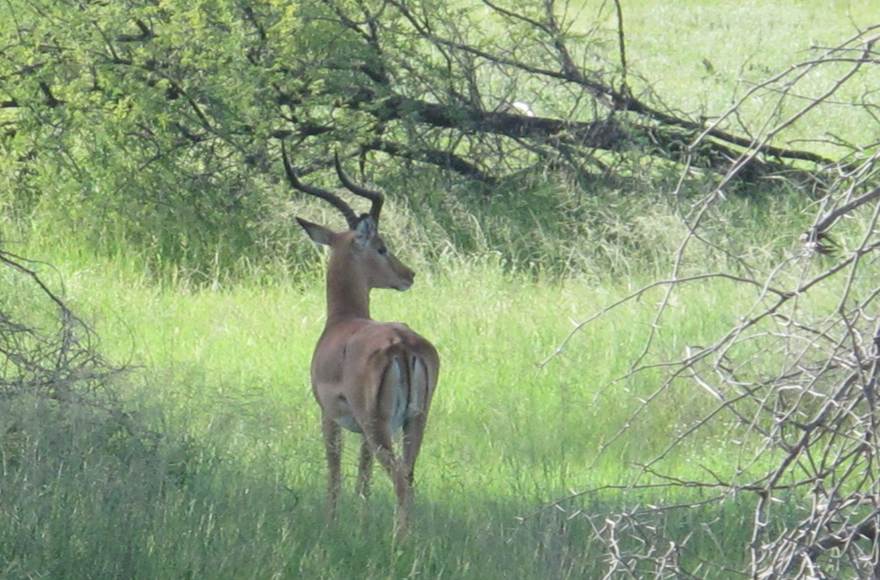
The Peace of Wild Things
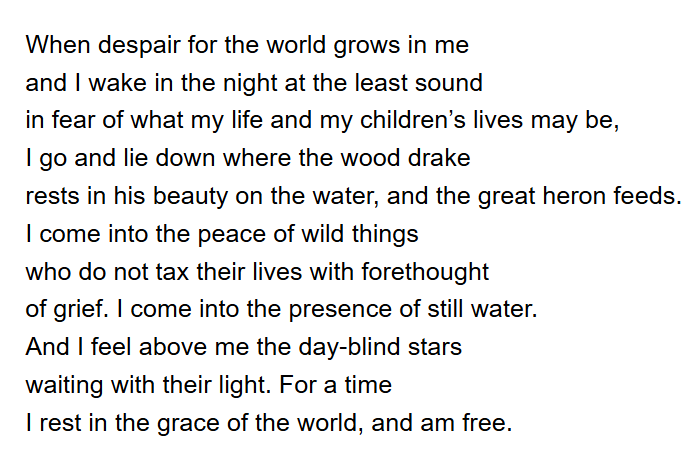
If you are wondering where my title came from, it is from a poem that I love by Wendell Berry who sadly died this week. For those that are interested, here it is :
Wendell Berry was an American author, farmer and environmentalist who fought for ecological responsibility and against industrial farming. According to the Poetry Foundation the message in his many writings was that “humans must learn to live in harmony with the natural rhythms of the earth or perish.”
It is this message that I would like to pursue in my blog, about how our disrespect for the land, and our treatment of the soil – with our industrial methods of farming – is in the process of degrading and destroying both. No doubt, if we don’t change our ways that will be the end of us too.
The good news, however, is that we are increasingly finding ways to overcome that degradation.
Our destruction of Nature
Berry’s fight was important, as humanity is in the process of destroying our living world little by little. A report by Friends of the Earth tells us we have been doing that for many thousands of years. ”In the main, humans have found clever ways to lay waste to the Earth and to push countless species to the edge of existence.”
Science Insights tells us that “Human activities destroy the environment through an interconnected web of pressures: burning fossil fuels, clearing forests, polluting waterways, paving over natural habitats, and driving species to extinction at rates tens to hundreds of times higher than what would occur naturally.”
We are rapidly losing our “wild things”.
If you are interested in learning more about Nature and what we can do, try some of my other blogs, for example. “Caring for Nature”, “Nature’s Way”, and “Why We Must Care for Nature”.
This blog will look at how we are poisoning our soil and degrading our land. The two are subtly different but both are of vital importance to the future of humanity.
The importance of land and soil
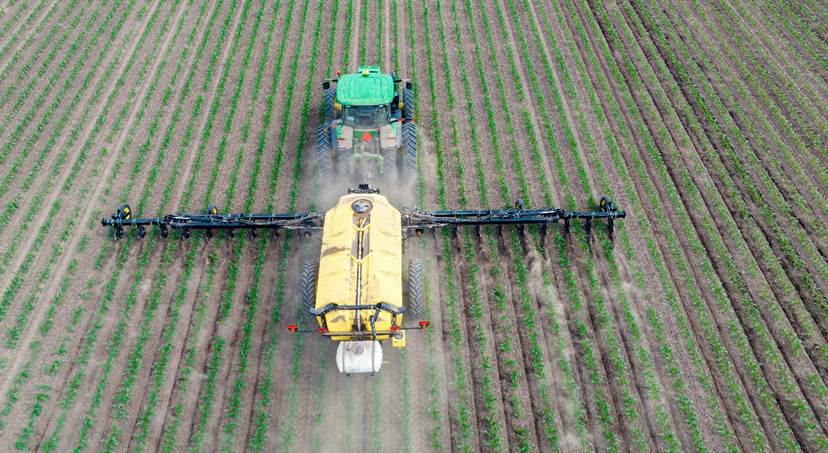
A tractor spraying pesticides
The Health of our Soil
After the provision of fresh water, the most important part of Nature for humanity is the soil. That is what feeds all 8.3 billion of us, probably over 9.5 billion by 2050. The soil consists of organic matter, minerals, gases, water and living organisms, all of which support plant production.
The FAO have described the recent state of global soils in a detailed report (which takes up to a minute to download). “Population growth, and other factors, all exacerbated by climate change, are driving an increase in the demand for food, feed, fibre and fuel. These pressures drive land-use change, unsustainable farming, industrial expansion and pollution, accelerating land degradation and undermining soil health and functions.”
Soil limits
Thus we are pushing our soils to their limits. For our survival we must from now on treat them in the ways they need to keep them healthy. The report further says, “Evidence shows that sustainable soil management can protect and restore soil health while supporting productive, resilient agrifood systems.” In other words we can fix the problem if we just get on with it!
Land Use
We use half the world’s habitable land for agriculture. With increased population growth, the need for more agricultural land as well as land for cities is changing, and there is less land available. Science Insights says that “The choices made about land utilization create profound repercussions that fundamentally influence the Earth’s climate system and the health of its biological diversity. Understanding these effects is paramount, as the sustainability of human society is linked to the stability of the land.”
* In other words, if we use too much land for human needs, we cannot balance the climate or the loss of biodiversity. *
Are soil and land degradation the same thing?
Just to be clear, soil degradation involves a decline in soil quality and fertility due to factors like erosion and contamination from heavy metals, pesticides, herbicides and so on. Land degradation is different and according to this blog “Land degradation refers to the decline in the quality and productivity of land, including its soil, water, and vegetation.” Some of its causes can include deforestation, over-grazing, Climate Change and urbanisation.
The Knepp Estate in England describes the situation rather more forcibly. “Soil degradation is one of the most pressing problems facing our planet. More than 80% of the world’s farming land is ‘moderately or severely eroded’, with 75 billion tonnes of soil lost every year.”
Can we fix it?
However, they also say, “a ‘regenerative farming’ movement is gathering pace, from naturalistic grazing systems to agro-forestry and ‘no-till’ (zero ploughing) agricultural systems, all of which focus on restoring soil structure and soil biology.”
Do, please, read the article on the Knepp Estate. For me it is an extremely exciting example of what can be done with commitment and vision. There is also a beautiful film called Wilding that shows the process the family has gone through.
Restore, Regenerate and Rewild
There are many new and exciting methods of restoring degraded land and soils. Try watching this YouTube video on using organic wool waste to restore very degraded land in Australia and New Zealand. It is a real story of man’s ingenuity.
Regeneration
Science Insights again says “A regenerative farm is one managed with the goal of restoring and improving the land it operates on… regenerative farming uses a set of interconnected practices designed to rebuild soil health, increase biodiversity, and capture carbon from the atmosphere.”
Crop Growth Sciences shows some wonderful and successful examples of regenerative farming. They talk of Brown’s Ranch in North Dakota which apparently is one of the biggest success stories in regenerative agriculture. There, the owner has “transformed his farm’s depleted soils into some of the most fertile and productive land in the region by adopting practices such as no-till farming, cover cropping, and integrated livestock management. His focus on building soil health and increasing biodiversity has resulted in higher crop yields, reduced input costs, and improved resilience against extreme weather events.”
This is a process going on globally, sometimes one farmer at a time. It will spread as farmers learn about its success.
Rewilding
The Triumph of Beavers
Rewilding Britain says that “Rewilding offers hope. In a nutshell, it is the large-scale restoration of nature until it can take care of itself – and us – again. It’s about restoring nature’s remarkable web of life, including habitats, natural processes and, where appropriate, missing species.”
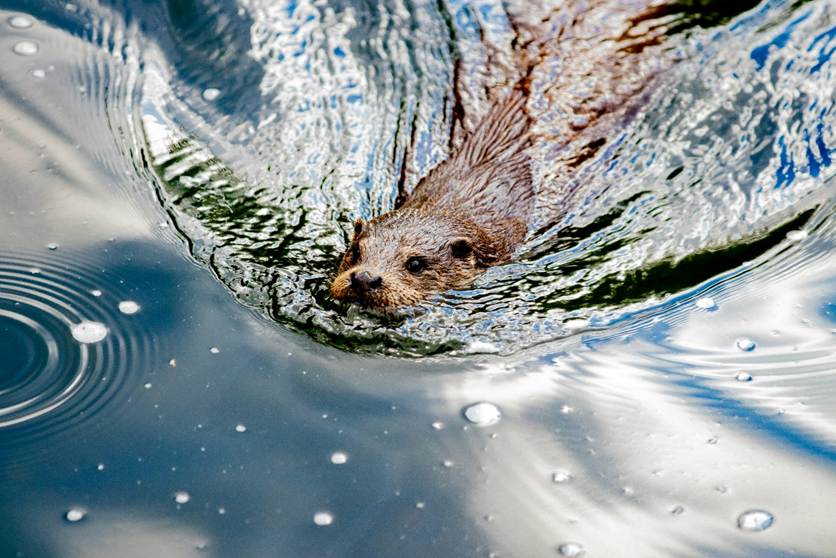
Beavers for example are being reintroduced in many countries, including the UK. They are known as a keystone species as just a few of them can make a huge difference in ecosystems. British beavers have already created habitats where other life can thrive, slowing down flooding and preventing the loss of soil to the sea.
Rewilding in the UK is starting to be taken quite seriously, as the Guardian newspaper shows in a recent article on Emblehope Moor.
This is a really exciting project on a huge area of land. It aims to bring back golden eagles, curlews, black grouse and beavers to the area. Each of those species will make a difference to the health of the land and the other species that will then thrive on it. If you read the article through you will see that already in that part of England there are a number of big land and soil restoration projects. I can’t wait to go and see the area.
There is hope for our land if we treat it kindly
I hope I have shown that in spite of the bad state of global lands and soils we can do something about it. That restoration is already happening worldwide, and I believe it would warm Wendell Berry’s heart.
As a final thought, I watched a YouTube video on our efforts to restore lands. It is over two hours long, but I found it really lifted my spirits and gave me hope. It is called Unearth: 25 solutions to protect and regenerate nature.
What can you do to restore our land and soils?
- Cut down on the amount of beef you eat.
- Look for organic or regenerative farmers in your area. Buy your vegetables from them.
- Don’t use pesticides (or any other -cides) in your garden.
- Plant wildflowers or local plants for your pollinators.
- Encourage your local council to plant wildflowers and not to use pesticides.
- Fly much less.
- Buy an electric car and solar panels.
- Make sure any wooden furniture you buy is from protected forests.
- Support organisations that care about the soil.
- Grow your own food.
- Make your own compost.
- Add organic matter like fallen leaves and dead plants to your soil.
- Don’t sweep up your dead leaves too soon. It is better for the insects if you leave them.
- Plant soil saving plants that add nutrients and nitrogen to the soil.
- Protect your soil over winter. Plant cover crops and cover the soil.
Finally, get together with neighbours and friends and talk about what you can do together.
If you are not yet on my mailing list and wish to be on it, please use the form on the Home page, this will help our administration and ensure you receive your own copy.
Photos by Doreen Hosking and by James Baltz and Andreas Schantl on Unsplash