
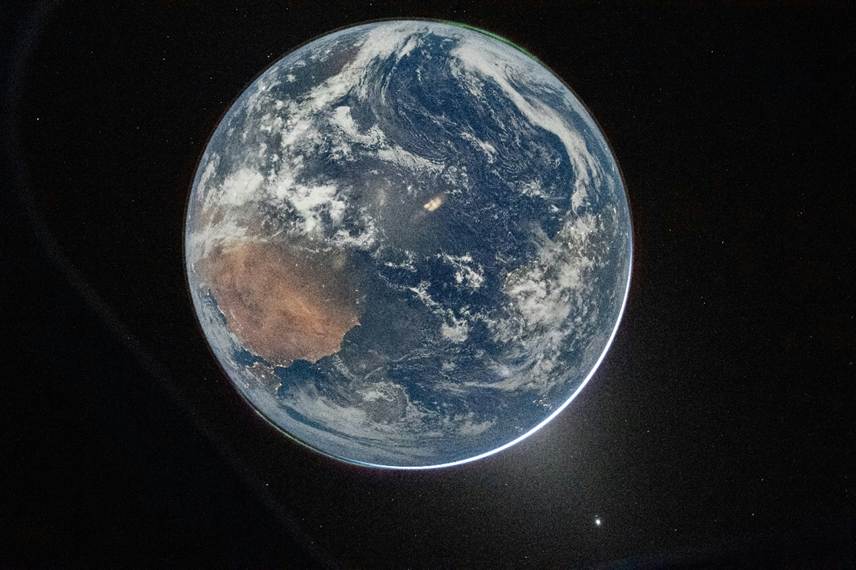
This incredible world is our common home. The only one we have. Yet right now it is a very troubled residence indeed. We are struggling with challenges like Climate Change, inequality, poverty, wars, greed, cruelty, and so much more. I believe that perhaps it is our egotistical concern for our own way of doing things that is holding us back more than anything.
Jo Cox, the British member of parliament who was murdered in 2016, said in her maiden speech, “we are far more united and have far more in common with each other than things that divide us.”
She was right. As human beings we share so much, as we will see. Yet we are selfish, we want to do things our way. We want “our” God to reign supreme. “Our” laws are best. Nations don’t want people from foreign countries on their soil. Other people’s needs don’t matter, only our own do. We deceive others to keep our own power. More stuff keeps us happy, and we believe that shows the world who we are, and so it goes on. We cannot agree about what needs to be done because we might have to give up “our” way of doing things.
Yet change is essential. Looking at what we have in common will give us the impetus to create change.
As the advert in the UK famously says, “there is no plan B”, meaning that if we don’t care for what we have, too bad, no more humanity! So somehow, we need to find a way to make this shared home function for all of us. I suspect we do need a plan B, and that does not mean 8.3 billion of us flying to Mars! But something that encourages us to change, that allows us to move forward. A project where we work together to produce a life that works for the planet and for all of us.
Right now we do not even have a Plan A
I recently read a story about an astronaut who returned to Earth after many days in space. His comments were telling; he questioned humanity’s priorities. He could see from far above the planet that we have no boundaries between us. We are all passengers on the same spaceship circling the sun. What affects one of us, affects all of us. Climate change is not limited by national boundaries: we are all dependent on the Earth’s support systems. The loss of our plant and animal life touches everybody. Inequality damages all our lives, differently, but nevertheless it eats away at our possibility of happiness.
It feels to me that there is no over-arching global plan. The disorder has built slowly, brick by greed-filled brick. We have had changes in the economy that benefit one country over another, power given to the rich without asking for responsibility in return, rights given to farmers to use toxic pesticides that are killing us, laws that benefit the multi-nationals instead of individuals, and on and on. All these apparently designed to help the economy grow, to make more money without thinking of our well-being, or that of the Earth.
This planet is our shared home, and somehow we need to find a way to talk to each other that recognizes these facts.
Money or status will not save us, love might.
What Do We Share?
Basic Needs
As human beings, regardless of the colour of our skin, whether we are gay or straight, religious or not, young or old and of whatever nationality, we have the same basic needs. We must have air, water, food, shelter, clothing and warmth. None of us can survive without them. Each and every one of us must have these resources.
That is only the very start of what we share. There are many values and emotions that each of us have, although they may vary slightly in different cultures. We all feel pain, and value our families and appreciate our traditions.
I have picked out a few of the obvious ones.
All you need is love!

We need the “Human” Emotions
These are emotions that we all have. We need love and social connections. It is important for all of us to belong. We need kindness because people everywhere need to be seen, valued and treated with dignity. Our requirement for belonging is a need that is not just emotional, it is wired into our brains through evolution. This can vary with our personal needs, and some people need to belong more than others.
Similarly, the human need for love and social connection is universal. However the level of need can be cultural. In other words some of us need more than others.
Science Insights says that “Humans need love and affection because close social bonds are not a luxury or preference but a biological requirement, wired into your body at every level from brain chemistry to heart function. A major analysis found that strong social relationships increase the likelihood of survival by 50%, putting loneliness in the same risk category as well-established threats like smoking and obesity. The need for connection isn’t sentimental. It’s physiological.”
They also say, “Over hundreds of thousands of years, the capacity for deep attachment became a core feature of the human brain, not an optional add-on.”
The Need to Create Art
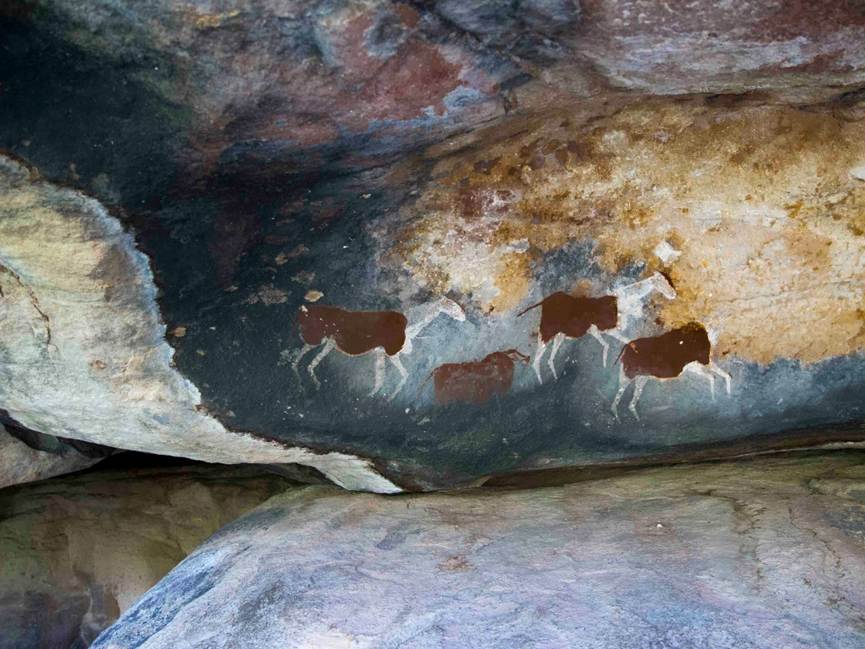
This is not something that is strictly needed for survival, but it seems to me that it is a universal need. All cultures do this in their own way. It helps us to express experiences, emotions and thoughts in a way words cannot. It cuts across many cultural and language barriers, and conveys emotions in a deep way that is otherwise difficult to express.
We have had art for a very long time. I was lucky enough many years ago to see the cave paintings in Altamira in Spain. They spoke to me across a period of at least 20,000 years of the desire of man to seek something sacred in their world. This is found across cultures and in many different time periods. Aboriginal art can be very spiritual and carries many wonderful stories. According to Google it spans a period of 65,000 years.
Michelangelo’s work in the Renaissance period is considered very sacred and he himself felt his art was a calling from God. However, art is not just a search for the sacred, it can serve to say many things, sometimes it is just stories of people’s lives, other times it is much deeper, sometimes it can just be fun.
Religion
The Philosophy Institute believes that the need for religious experiences is universal. They ask “why do humans, across every culture and every era, reach toward something beyond themselves? Whether through prayer at dawn, a moment of awe in nature, or a ritual passed down through generations, the impulse to seek religious experience seems woven into the human condition.”
I wonder about this. It seems to me that many people, while denying there is a God, live good lives with values found in some of the world’s great religions, people like Humanists. There are also many, I believe, who have no religion at all and are contented with that. Perhaps they find their religious experiences in Nature.
I also wonder if this is something that is missing in our unhappy world, if we could find a “God” that fitted us all, would we fight less?
These are a few of the needs that humanity shares, There are many others. I have not mentioned laughter, or the thrill of becoming a grandparent! Nor have I talked about how much parents want the best for their children and will do almost anything to protect them.
Where do we go from here?
Human beings thus have a great deal in common regardless of where they come from. So I wonder why can we not start there in designing our plan? Can we not put aside our petty differences and demands and remember we are the same at heart? If we start from what we share then it is easier to move forward.
Our economics and policies were created. We can recreate them in ways that will work for us all, and for the planet.
We Can’t Go Back, our World is now too Complex
So therefore, we must go forward. We must find a way of creating a world that will continue. But I believe that Jo Cox was right. We are far more united and have far more in common with each other than things that divide us.
We share so much on this crowded planet of ours. Let’s find a way to make it work. Let’s develop a Plan B. One that works for everybody no matter who they are.
We can find a more civilised way to talk about our differences than going to war. We don’t have to have an economy based on consumption rather than well-being for all. Most of us love Nature and we all need her. That seems a pretty good reason to talk together about how we might fix things.
Let’s educate our children to be kind and empathetic, to love and spend time in Nature.
We can teach them to build a better world where we don’t hate each other, where we are happy with what we have and we don’t need to impress others to be whole. Why can we not change our farming habits to restore the soil, grow healthy food locally and monitor our water use?
So many things we can do. But it needs our courage. It needs us to stand up against the greedy multi-nationals and say NO! I won’t buy what you are selling, I want a different world for my children. It needs us to vote against power-grabbing politicians and to tax billionaires. It will only work if we make it. That is YOU and ME!
I know that we can find that courage. I have seen it in election results in Brazil and in Serbia. People have said ENOUGH! Brazil cheers me enormously, and I am happy for them and for the Amazon, and for our world too.
WE can say enough! to a world of war and uncertainty.
The Santa Marta Coalition of 57 countries who want to phase out fossil fuels brings me hope. They sat down together to make a plan for something better. We need more of that.
If you are not yet on my mailing list and wish to be on it, please use the form on the Home page, this will help our administration and ensure you receive your own copy.
Photos by NASA, Buddha Elemental 3D and Don Pinnock on Unsplash