
“Trees are poems that the earth writes upon the sky.” – Khalil Gibran
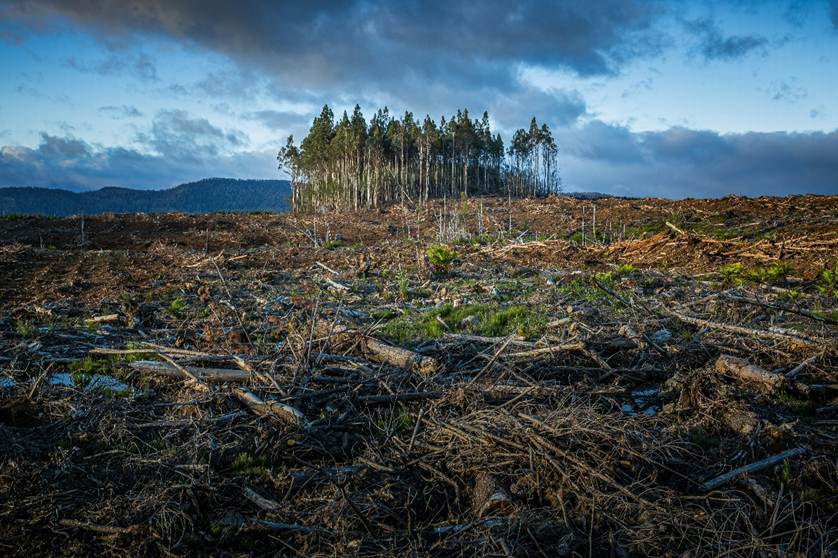
According to the Woodland Trust, “Trees are our lungs. Trees are our guardians. Trees are our health service and wildlife champions.” In addition, “They are one of our best defences against the climate and biodiversity crises.”
We desperately need more trees and yet as David Attenborough says “Worldwide, we have now destroyed over half of the forest that once flourished on our planet. Not only are we losing the animals that once lived on them, we’re also changing the climate of the entire globe.”
How we Misuse Our Forests
The measurement of forest clearing is complicated – have a look at this article by Science Insights. Forests are being cut down for different reasons and in huge numbers.
Who is doing what?
What I choose to look at it is the large industrial-scale clearing of forests, not the small-scale use of forest land for families, in places like Africa and Central America. In the case of small-scale farmers the forests are likely to go back to their original state after a few years. These farmers are simply feeding their families, although the article does say the proportion of land-clearing for this purpose may be bigger than we think.
Industrial-scale forest clearing is to feed our greed. This is not the greed of local workers in these areas. According to Earth.org around a dozen major companies are responsible for much of the damage. These huge companies do not care about what they are destroying. They seek profits for their shareholders.
The Earth article shows the main companies involved. Obviously, there are others.
Trees are cut down on a massive scale in different countries for different reasons. If we go back to the Science Insights report we see that “The crop driving deforestation depends heavily on where you look. In South America, it’s beef and soy. In Southeast Asia, palm oil plantations have been the primary force behind forest loss in countries like Indonesia and Malaysia. In West Africa, cocoa is a major culprit.” Forests are also damaged by logging and mining operations.
The Good News in all this
This information brings us good news because there are so many areas within these figures where each of us can make a difference. We just need to commit to doing it.
Which is the biggest problem here?
Beef
Illegal grazing on deforested land
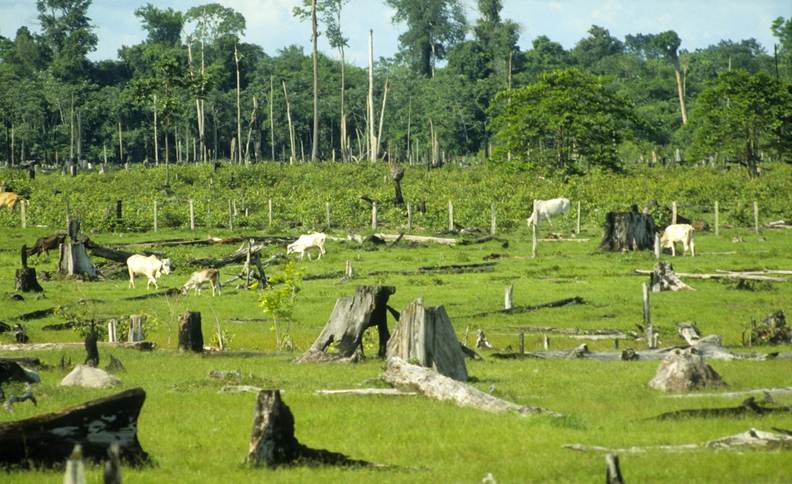
How Does Beef Production Drive Deforestation?
This article shows that “Beef production is the single largest driver of tropical deforestation worldwide as forests are cleared for pasture land. In regions like the Amazon, trees are burned to create space for cattle to graze, releasing stored carbon into the air.
“This process removes natural carbon sinks that would otherwise help regulate the global temperature. (Carbon sinks remove carbon dioxide from the atmosphere and thus it doesn’t contribute to global warming.) Furthermore, land is also cleared to grow soy and corn for cattle feed, compounding the environmental impact.
The loss of these forests accelerates climate change and destroys vital biodiversity essential for a stable planet.”
The above is a lengthy quote, but I believe it describes very accurately how our desire to eat beef is destroying the planet.
How Important is Deforestation in the Amazon?
An article by Green Packs shows that “Deforestation in the Amazon rainforest has emerged as one of the most pressing environmental issues of our time. This vast expanse, often referred to as the ‘lungs of the Earth,’ plays a critical role in supporting global biodiversity and regulating the climate.”
It is also the case that excessive deforestation “is causing seismic shifts in both the local and global environment.” Removal of so many trees destroys an area able to absorb carbon dioxide from the environment. It also disrupts complex ecosystems that have been thriving for millions of years.
Biodiversity Loss
One of the worst consequences of deforestation in the Amazon is a catastrophic loss of biodiversity. You might ask “Well how does biodiversity loss affect me?” An article by Biocascades reminds me firstly, that I don’t have enough space to describe the wonders of Amazonian biodiversity, and secondly just how important it is to humanity’s well-being. Please read it.
Other effects of beef production
Water Use
A paper by Simago Institutions on water use in raising beef cattle in the Amazon shows that for each kilogram of beef produced that requires over 13,000 litres of water. (This is quite low compared with other parts of the world.) However Brazil produces a vast amount of beef. The paper says that in 2011 there were estimated to be 208 million head of cattle.
Ecosystem Services at risk
Many of the ecosystem services that we rely on (the benefits that we derive from ecosystems, like production of clean water) are now at risk because of deforestation in the Amazon. These include things like: sequestration (removal) of carbon from the atmosphere, provision of clean water and pollination.
Release of methane
Methane is a very potent but short-lasting Greenhouse Gas. It is released from the soil during deforestation and the conversion to pasture for grazing. The cows themselves produce a lot of methane as part of their digestion process. Clearly the methane contributes to Climate Change.
Just to summarize
Deforestation in the Amazon disrupts global climate regulation by reducing evapotranspiration, (transport of water from the Earth’s surface to the atmosphere) lowering rainfall, increasing temperatures and releasing stored carbon, thereby intensifying droughts, wildfires and climate change impacts worldwide.
So the next time you fancy a beef stew or a steak think about the recent wildfires and ponder a little.
The Pressures of Increased Demand for Beef
Asian Demand for Beef is Increasing

The global beef market is enormous and destined to increase in size. There are different estimates of its size so it is hard to be exact. However it is likely to be around the figure given by the following link: https://www.businessresearchinsights.com/market-reports/beef-market-123176. This shows around $294 billion in 2026, expected to rise to $380 billion by 2035. That is a lot of deforestation.
Global demand
The demand for beef globally appears to be increasing because of an increased demand for high-quality protein, higher incomes and increased globalisation. Both China and Brazil have considerably increased their consumption.
The philosophical problem here of course is how can we ask these countries who have been poor to restrict their beef intake to avoid deforestation? When we in the global north have had our fill of beef over many years. That will be an interesting problem to solve.
Good News in the Amazon
An article in Al Jazeera shows a significant fall in the deforestation rate in the Brazilian Amazon. President Lula aims to stop all illegal deforestation there by 2030. While Lula’s environmental record may not be perfect, this is very good news. Unfortunately Lula faces a presidential election in October this year. For the sake of the world I hope he wins.
What Can You Do?
I remarked at the beginning of this blog that to help deforestation there are many things each of us can do.
- Cut down the amount of beef you eat. You don’t have to cut it out completely but if we all ate less it would make a difference. It is better for your health too.
- Choose products free from Palm Oil. You need to read the small print on supermarket items.
- Choose products free of soy
- Buy cocoa and coffee produced either by Freetrade companies or those certified by the EU not to contribute to deforestation or degradation.
- Buy wooden products from sustainable sources. (Not IKEA.)
- Make sure any paper you buy comes from sustainable sources.
Why we need to avoid deforestation
Our forests are vital resources to naturally control Climate Change. We are in the process of destroying them. Preserving and restoring them is imperative for any sort of decent future for our kids. You can do a lot here. Please try.
If you are not yet on my mailing list and wish to be on it, please use the form on the Home page, this will help our administration and ensure you receive your own copy.
If you are not yet on my mailing list and wish to be on it, please use the form on the Home page, this will help our administration and ensure you receive your own copy.
Photos by Matt Palmer on Unsplash, Ecowatch https://www.ecowatch.com/brazil-fines-cattle-ranchers-meat-packers-amazon-deforestation-ibama.html, and by Elevandos Medya on Unsplash
Keep up the good work Doreen.
I have tried to avoid eating products containing palm oil for at least 20 years after flying over Malaysia and seeing the countryside covered by palm oil plantations. It was quite a shock to me as I remember growing up there in the 50’s and it was covered mainly in secondary jungle from abandoned rubber plantations. There were a few of them still but they supported more wildlife than palm oil plantations.
It’s difficult to buy ultra processed food without palm oil but cooking from scratch can avoid it.
I try my best to spread the word but young people are so busy trying to survive that often it falls on deaf ears. I just think our politicians need to legislate to help our environment but those with the most power have been lobbied by the big multinationals whose interests are to make money no matter what the environmental consequences. We can put pressure on our MPs but we need to organise to do this. Things are going to have to get tougher for everyone before the motivation is there to do something about it.
I feel pretty powerless really and do my bit by growing vegetables and plants that are good pollinators.
I do read your blogs and find them interesting so keep going and hopefully this will spread the word.
Thank you Cathy for your comments. I appreciate them. I can see why you would feel sad about what is happening in Malaysia.
The devastation produced by palm oil plantations is awful and the poor orangutangs. I just hate what is happening to them.
I am sure you are right, sadly, about things needing to get worse before they get better. They seem pretty bad right
now with all these rich folks able to do what they please. It makes me furious that the governments won’t do anything about them.
But so many things make me furious these days!! Don’t even mention Israel and the British government!!
thank you for this excellent blog Doreen and the practical suggestions for what we can do. I wish Palm Oil was marked more visibly!
Just a word in defence of soy (as far as I understand it). Approximately 77% to 80% of global soy production is utilized as animal feed to support the meat and dairy industries. A much smaller proportion — roughly 6% to 7%—is used directly for tofu, soy milk, tempeh etc. The remaining portion of the global crop is primarily processed for vegetable oil (used in cooking etc.) and industrial applications (such as biofuels and lubricants).
So a reduction in the demand for meat and dairy would actually reduce the amount of soy being grown, and hopefully prevent deforestation. I try to buy soy products where the beans are grown in France.
Thanks again for this important information. Our trees and forests need protecting!
Thank you for your nice comments Henry. The stories about soy are quite fascinating. What you said was interesting
and perhaps hopeful. I am not usually happy about biofuels. I am not sure we have got that one right.
Perhaps it is not possible. I don’t know. I did however look up French soy as there is quite a lot of it grown around here.
I think it has only started in the last couple of years which makes sense as the French government has recently
produced a growing French soy policy. Apparently it is to reduced imported deforestation. I didn’t know about that before but am quite impressed!
Yes, protecting the rainforests is crucial.
And there is more to it! Forests transpire water vapor that form clouds. The process moves heat from the ground to the upper atmosphere, where it radiates out into space. The clouds themselves reflects sunlight back into space.
So – forests are an integral part of the Earth’s natural cooling system. By reforesting man-made deserts at scale we have the possibility of actually cooling the Earth.
We would do well to bring this into the climate conversation.
I agree with you about trees and how wonderful they are. It is a great worry about what will happen to our weather
if we lose a lot more of the Amazon. I do wonder how successful we can be in re-foresting the desert.
The Chinese and many African countries have tried rather unsuccessfully to do just that. Certainly they have learned a lot of lessons
but their success has not been quite as high as they would have liked I believe.
Thank you for your comments, I am always grateful when people respond.
I find your organisation fascinating by the way and am going to look into it when I have a spare moment!