
Yellow Poppies
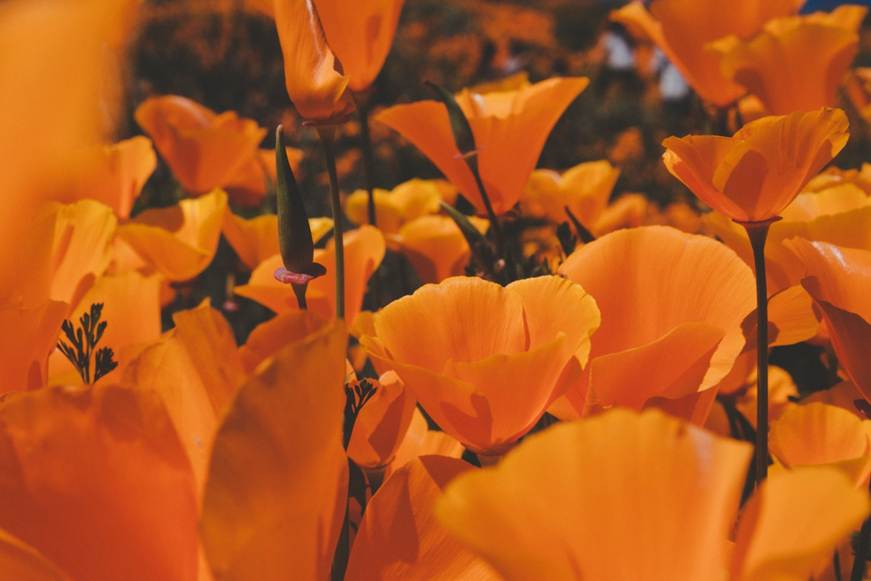
I was sitting in my garden this morning, admiring the flowers after the recent rain. We haven’t had rain for a long time, and the grass is very brown and burnt. Till yesterday the flowers looked sad and somewhat pathetic. I noticed today that in a small corner there were some pretty yellow flowers. Somewhat to my surprise I realised they were poppies. Poppies usually bloom in springtime and this is September!
I felt like I do about our present world – turned upside down, bewildered, distressed – the French have a lovely word for it – bouleverser – meaning all of those things!
Nothing seems as it should: poppies should not bloom in September, politicians should not be corrupt, it should rain – at least from time to time – the neighbours should be friendly, and people should be kind to each other. Our food should taste of something, the Amazon Rainforest should be creating our weather, not being logged to create land for beef, we should be more equal and the truth should be – well – the truth I suppose.
How should the world be?
The problem with all that is that we are looking backwards all the time. What will change if we only complain about what has disappeared from our lives? It is very depressing.
I came across a quote by an unknown person that makes a lot of sense to me when thinking about what we have lost:
“An upside-down world is only a tragedy if you insist on viewing it from the old angle.”
How might we feel if poppies really bloomed in September? Perhaps we could think “isn’t it lovely to see these pretty fresh flowers after a hot summer?” or “isn’t it nice that the poppies fill a cheerful space in the flowerbed?”
Of course that is frivolous, however I believe that we need to view our world and its challenges through a different lens.
The planet has been changed, in most cases not for the better. Let us use that fact to motivate us. Let us change our lifestyles to something we want, that works for all of us.
Can we create a world that makes us happy?

Because I do a lot of research for my blog, I read the newspapers every day. I search the internet for facts and stories. But I am finding that process more and more difficult. There is so much negativity in our world, so many lies, so much aggression. I guess we are all scared. Yet I am a scientist at heart, and I like facts, real facts that make sense, not odd, isolated incidents that somebody has picked out that make us feel bad.
The fact is that in spite of the pessimism and the fear there are millions of people out there working to change the situation we are in. There are brave men and women working to make our future better in all walks of life. Just because we don’t hear about them does not mean they don’t exist or that there is no good news.
Before I answer the question about creating a world that makes us happy, I would like to tell you about some of the stories and wonderful people I have come across in my searching.
1. Rutger Bregman Schools of Moral Ambition
Some of you may have come across this man before. He is a Dutch historian and he recently gave the Reith Lectures – a very long-running British series of radio lectures given by prominent figures. His series was called the Moral Revolution.
He now writes on Substack, and he has just published an article on his idea of persuading talented students, who would normally go on to work for some of the big investment bankers, to sign up for his School of Moral Ambition at Harvard. Instead of working for an investment banker, they agreed to study his course and at the same time work on some of the biggest problems of our time, for example child poverty.
This idea was so exciting that a student at Princetown University wanted to set up a similar course there, was told no that was not possible, and did it anyway. The idea was so challenging and interesting for young people that there are now nine universities in America with such schools. Do read the article. It shows me that a career in earning vast sums of money is not seen as the be all and end all in life.
2. Lagos Fashion Week and the Earthshot Prize
You probably know that the fashion industry is an extremely polluting industry with a great deal of waste. This waste adds to our carbon emissions and thus to Climate Change. Apparently the industry contributes 8-10% of the global carbon emissions each year.
This Nigerian fashion week is now leading a transformative movement led by Omoyemi Akerele that is based on sustainability and ensuring that those standards are passed down through the supply chain. This fashion week has grown to be Africa’s largest and most influential fashion event and is very influential. The Earthshot prize judges were clearly very impressed. Do have a look.
3. Adapting to extreme heat
The mayors of three major cities, Paris, Milan and Pheonix (Arizona) talk about adapting their cities for extreme heat in this article.
Hot, Hot, Hot!

These mayors have decided that time is too short, and Climate Change is too critical, to learn by their mistakes, and have agreed to learn from each other. Pheonix is a desert city and has long had to learn how to deal with high temperatures. I remember many years ago now my husband and I visited the city. I have to tell you for young Scots who had never been away from home before, the temperature was unbelievable for us. It was a little like walking into a furnace. The temperature was 44 degrees Centigrade so even then people were suffering! Since then Phoenix has done some pretty amazing things to ensure the comfort and safety of their citizens.
Inspiration
Paris and Milan have taken inspiration from this, although they have their own problems and challenges. In 2023 the French city ran an exercise called Paris at 50 degrees C which involved the whole community. Apparently, it was so successful it inspired Barcelona to do the same thing. Milan was similarly inspired by Barcelona and Paris and has come up with some pretty interesting ideas since.
I am moved by their willingness to learn from each other.
4. Mangrove Restoration in Senegal
An organisation called Livelihoods which works with rural farmers, in conjunction with a Senegalese NGO called Océanium, are doing the biggest Mangrove Forest restoration in the world. They have already planted 79 million mangrove trees. As well as being very efficient at absorbing carbon dioxide from the atmosphere, these forests help reduce the salinity of the local water, protect vital arable land for agriculture and also restore rice paddies because they can reduce the salinity of the irrigation water. It will also boost depleted fish stocks. Livelihoods also says, “this project is unique due to the exceptional level of social mobilization it has achieved: the involvement of 350 local villages and 100,000 people.”
So, can we create a world that will make us happy?
I believe we can, if we learn to work together in our communities. It will not be simple and there will still be the challenges caused by the damage we have already done.
We must learn to look at our new world through a different lens. A lens that says, ok we can’t have what we had before, we didn’t like it much anyway, now let’s create something better. This would not be the old angle angle, but a new way of looking at the world.
That “better” must be better for everybody, or it won’t work. We must get rid of fossil fuels and capitalism, and we must find a way to restore Nature. There are already ways of doing these things (not yet perfectly, but we are well on the way).
We can be happy with less stuff and more time with our families. We just need to make a kinder world.
There is more, of course, but even to get started we must act together and now.
If you are not yet on my mailing list and wish to be on it, please use the form on the Home page, this will help our administration and ensure you receive your own copy.
Photos by Mickey Dziwulski, Timon Studler and Immo Wegmann on Unsplash
I really appreciate this way of looking at our changing world. Perhaps what we need is not only to learn to live with a different world, but to learn to love the world that is still here.
We have become so accustomed to seeing nature as something to use, manage or protect that we may have forgotten something more fundamental: simply to love it. To sit in a garden after the rain, to notice a flower blooming at the “wrong” time, to listen to birds, feel the wind, or walk among trees without asking what they can give us — these are small acts, but they can change the way we inhabit the world.
Perhaps restoring nature begins there: not with a new technology or a new policy, but with recovering our capacity to be touched by the living world. We cannot truly care for what we no longer love. And perhaps, before creating a better world, we need to learn again how to love the one we have been given.
I like this way of looking at life and indeed there are many wonderful things to appreciate. You are certainly right
that we won’t care for what we no longer love. But we may lose so many things that we love. As a Scot I love
the rain on my face and the wind blowing through my hair. This summer in France we have had so little rain and the
flowers have seemed very sad indeed. Even the normally raging rivers no longer foam and race over huge boulders inspiring awe,
here in the summer. I miss that and I hate the heat. I find it hard to love nature when everything is dry and burnt. But again you are right, we need to work at it I think. I love to lie in bed in the early morning listening to the Tawny Owl calling
as he comes home after a night hunting. Perhaps I could help protect the owls!
I believe that we need to create a vision of how we want our “better” world to be- no capitalism, a healthy food system,
regenerated nature, different values and so on. But I also think we need to decide what we want to take with us to this new world. That will surely include things we love.
And Positive News is a good way to discover how many ‘better’ news stories there are!
Thank you Edwina I use Positive News
and all the other Hopeful things I can find. Sometimes they have really fascinating things which I then check up on.
Does Positive News cheer you up? It does me.
Thank you Doreen. This kind of thinking gives us hope with capital H! It also brings so many reminders of Quaker advice on our behaviour.
With love
George
Wise people the Quakers! It is so easy these days to become mired in despondency. Sometimes I just want
to put my head in a bucket!! But I usually recover and just get on with it. I don’t think we have any choice.
Thank you for your nice comments.