
Earth’s Ability to Support Life is Deteriorating. It Needs our Help
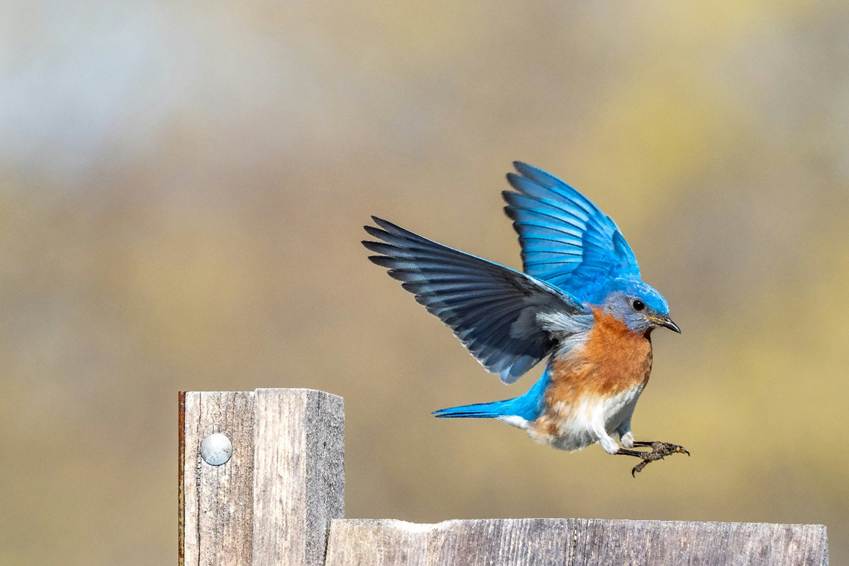
According to Henry David Thoreau, “The price of anything is the amount of life you exchange for it.”
If we apply this to Nature, it becomes a profound warning. Every time we destroy a forest or pollute a river for profit, we are exchanging the very life-support systems of our planet for temporary material gain.
Nature everywhere is telling us that it is struggling and that our demands exceed its capacity. Protecting it requires urgent and long-term action on our part.
Healing Nature is as important as Climate Action
We hear a great deal about Climate Change these days, which is encouraging, although our success in dealing with it is mixed. We are doing well on the conversion to renewable energy and adaption but less well on ending the use of fossil fuels. What many people don’t seem to realise though, is that it is just as important for us to heal our natural world. Climate Change and the Environment are interlinked. Healing one helps the other and vice versa.
(Just to be clear, Nature includes living creatures as well as non-living features such as mountains, oceans, glaciers, air, and water.) We are threatening all of these.
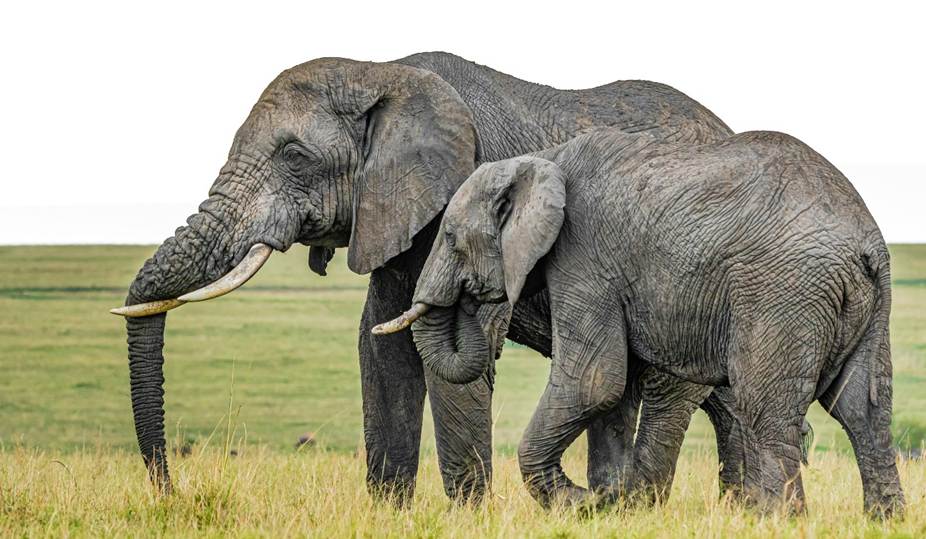
All Living Elephant Species are now Endangered
How are we damaging Nature?
Science Insights talks about how we are harming the Earth. They say “Human activity is damaging the Earth across nearly every measurable dimension: the atmosphere is warming, species are disappearing, forests are shrinking, water supplies are drying up, and pollution is accumulating. The global average surface temperature is rising, atmospheric CO2 is growing – – -, and vertebrate species are going extinct up to 100 times faster than the natural background rate. These aren’t isolated problems. They’re interconnected consequences of how we produce energy, grow food, use land, and consume goods.”
Can We Fix It?
According to WWF – yes we can. They say “It’s not too late for Nature to recover, but we need big, bold solutions. Restoring Nature will require unprecedented conservation efforts that meet the scale of the Nature loss crisis, and an urgent transformation of our food, energy and finance systems.”
Will We Do It?
That is a different question! My answer, as always, is “that it is up to us to choose” Our individual efforts are important, but we must find a way to motivate politicians and investors to change.
If you haven’t seen the British film “The National Emergency Briefing”, you need to. The organisation Seeding our Future tells us that “This film and project deserve our support”. This is a new initiative. The Briefing features 10 experts, authorities in their sector, setting out the implications for health, food systems, the economy and society of the Climate and Nature breakdown. It is designed to encourage politicians to change their outlook and to work for our future.
The aims of the organisers are threefold:
- The UK Government should deliver a national emergency briefing on primetime TV, followed by regular updates.
- The UK Government “should launch a science-led national emergency response to the climate and nature breakdown showing the same leadership and determination as WW2…”.
- The UK should help lead stronger global action on these issues.
This is a very exciting enterprise. The film has now been screened over 2,000 times and seen by a good number of members of parliament and leaders from across UK society. Many of those are now calling on the government to do a live screening on TV. According to Facebook, “there are now screenings of the People’s Emergency Briefing in Ireland, Germany, France and Belgium – and Guernsey and Jersey – as well as further afield: Croatia, Malaysia, New Zealand and Australia.”
You can now watch the individual experts on You Tube here, but not yet the film.
I am hoping that this will help motivate and educate our politicians about what we really need to do.
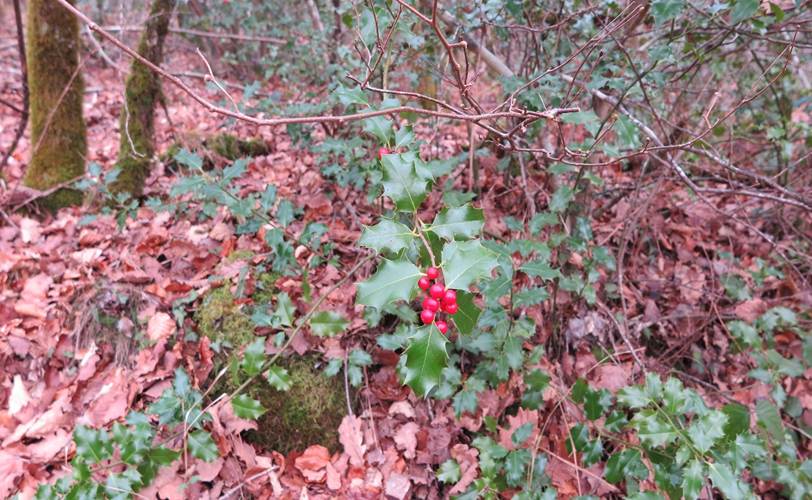
Some of the Wonders of Nature We Need to Save
There is always good news and bad about our progress towards caring for our world. This is why I think we should be hopeful but very determined and also very active in our contributions towards that care.
I want to tell you about some of the great things I have found in my searches this week.
Good Things that are Happening for our World
There are a number of people in this world that I am starting to admire quite a lot. Although I am not a Catholic, Pope Francis was one of them, Pope Leo is another. He has recently announced that environmental destruction, according to the Catholic Church, is an “ecological sin”, France 24 said recently. Pope Francis, you may remember, wrote and published Laudato Si, a call to care for our common home. So clearly the Vatican, or at least the last two Popes are committed to the environment. Will it make a difference? I don’t know but there are 1.4 billion Catholics in the world so hopefully some of them are listening.
There are some good guys out there with lots of money
Whether you like them or not there are some very rich people in the world fighting for Nature. According to GeekWire some Americans are among them. There are: Jeff Bezos of the Bezos Earth Fund, created in 2022 and with which Jeff Bezos made a commitment to spend $10 billion. This includes grants to various environmental and climate justice organisations and to a large ocean fund.
There is the Bill and Melinda Gates Foundation whose primary commitment is towards health but also includes agricultural development and water improvement.
MacKenzie Scott (ex-wife of Jeff Bezos) is also working hard on climate and environmental issues.
The worry, apparently about at least the first two, is that they are also very technologically involved and are very keen on geo-engineered climate solutions. These could turn out badly.
Less powerful maybe but still rich!
Worldwide there are many rich people who want to help the environment and have done a great deal to make a difference. I found some interesting people:
Rodolphe Landemaine a baker in France restoring forests.
Kristine Tompkins, co-founder of The North Face and Esprit and eventually of Tompkins Conservation the world’s largest private land donor, responsible for the creation of 11 national parks in Chile and Argentina, protecting 14.5 million acres. She also has “an astonishing track record of buying swathes of environmentally degraded land and transforming them into naturally wild refuges brimming with life.”
More people, probably many thousands, are committed to helping Nature. I imagine that eventually the issue may be that there is too much land in the hands of individuals and private investors. For now, I am just happy that somebody is caring about Nature.
The World Food Programme in the Sahel
The Sahel is a huge, semi-arid zone south of the Sahara Desert. It has rain for about three months of the year. For the rest it is very hot. The World Food Programme (WFP) has a large and successful land restoration programme there. Clearly after 9 months with no rain the earth is very dry and when the rains come, normally they would just run off and be lost and with it, fertile soil. The WFP has built a 6,000-metre-long dike to capture the rains. This regenerates the land, replenishes the groundwater and builds food security and income.
This work is part of the Great Green Wall Project which has been going since 2007. It was initiated by the African Union to combat desertification. There were many problems with the initial project, but it has been re-thought and now includes regenerating a stretch of land 5,000 miles long. Other goals include replenishing 250 million acres of land and employing 10 million people in jobs relating to the environment by 2030.
So there is a lot of help for Nature out there. We just need more!
What can you do?
Perhaps it is time to get political. It is imperative to get more politicians onboard and to fight those who don’t care about our world, only what they can take from it.
You could:
- Write to your Prime Minister or President or maybe state Governor if appropriate. Tell them to think about Nature.
- Write to your favourite newspaper and tell them to produce more articles on Nature’s problems caused by humanity.
- Write to the President of the European Commission, Ursula von der Leyen, asking her to increase European support for Nature.
- Buy an electric car.
- Write to the World Bank and ask them to fund more adaption.
- Write to the head of your spiritual tradition and ask them to get involved in the fight for Nature.
- Stop investing in companies who don’t care about Nature.
- Support the Worldwide Fund for Nature or organisations who restore Nature.
It is time to get active (there is so much more you can do) and beat the drum for Nature. We need her in top form.
Thank you.
If you are not yet on my mailing list and wish to be on it, please use the form on the Home page, this will help our administration and ensure you receive your own copy.
Photos by Patrice Bouchard and “Photos By Beks” on Unsplash, and by Doreen Hosking
Do you really think electric cars are good for the environment?
Hi Edwina, the short answer is yes I do but here is a link that answers it so much better than I can.
https://www.electriccarscheme.com/blog/are-electric-cars-really-better-for-the-environment
It deals with mining for rare metals and the long term use and recycling of batteries etc and how it makes a difference
and so on. The only think it doesn’t cover I think is that having an electric car sends a message to other
people that you believe Climate Change and the fact that there is a danger to health from petrol car pollution is important and that one wants to do something about it. Also there are now EVs coming out that can feed back into the grid when required. That will
make the whole thing run much more smoothly I believe.