
“All good things are wild and free” – Henry David Thoreau
The Wonders of Nature
According to WWF “The natural world is an incredible wonder that inspires us all. It underpins our economy, our society, indeed our very existence. Our forests, rivers, oceans and soils provide us with the food we eat, the air we breathe, the water we irrigate our crops with. We also rely on them for numerous other goods and services we depend on for our health, happiness and prosperity.”
According to Rilke, “If you will stay close to nature, to its simplicity, to the small things hardly noticeable, those things can unexpectedly become great and immeasurable.”
Do We Care for Nature?
Sadly, many of us do not. We treat it as a provider of short-term financial benefit. So we exploit it through deforestation, over-fishing, pollution and over-use of its resources. We declare war on it by blowing up mountain tops for minerals, and destroying the sea-bottom by dredging. We pollute it, set fire to it, poison it, and drain its resources. We kill its wild creatures.
An article in the Guardian newspaper over two years ago now, highlighted that “to counteract the potential loss, research indicates humanity must work to restore nature across the planet, adopt more environmentally friendly farming practices, reduce meat consumption, stop the spread of invasive species and dramatically cut the use of fossil fuels.”
Our war on Nature will exacerbate Climate Change, resource-depletion and biodiversity loss, while worsening health, food and water security, economic opportunities, and social stability for current and future generations.
The UN Conference on Biodiversity
I choose to write about Nature today for a number of reasons:
Number one is that the UN Biodiversity Conference (COP17) will take place in Yerevan, Armenia, from 19 to 30 October 2026, under the theme “Taking Action for Nature.”
Many targets for saving Nature were set at the last conference in Montreal in 2022. An article in the Guardian says that “Ahead of the summit, countries met in Nairobi to discuss their priorities for the summit, concluding that they are off track on every single one of the 23 targets they agreed on in Montreal in 2022.”
Weeping is not really an option here! It is time to get a move on!! To be fair there has been progress on some targets. In particular protecting the land for the long-term survival of humanity is almost at its target of 30%. Within this is a very specific ask of protecting wetlands, rainforests, grasslands and coral reefs.
There are three main COPs this Year
The Nature COP is the second of the UN COPs to take place this year. The first was the Conference on Desertification and degraded land that took place in Mongolia in August. These COPs are designed to help drought-stricken countries and their peoples.
Euronews states that “Almost 3 and a half billion people on the planet are affected by land degradation. According to some estimates, it costs their states and local communities 900 million dollars every year to do something about it and save people from loss of income and food sources.”
One of the really good things that has emerged from this COP is the fact that it attracts private money. It also attracted interactions between many of the countries that have drought and land degradation problems. This meant that they were able to share their problems and propose solutions.
The Third COP of the Year
COP 31 Starts in Antalya in Turkey in November. Climate Change is high on the agenda at that event, as will be funding for less developed countries.
I often find this conference season very depressing as there is lots of discussion but sometimes not a lot of give and take for the sake of humanity. This year I am intrigued about what will happen. After a meeting in Columbia earlier this year a solid group of countries (57, representing one third of the world’s economies) agreed to meet to talk about transitioning away from fossil fuels. A second such conference will be held in Tuvalu next year. Now the subject has been broached I am hopeful that eventually we may be able to bypass the COPs or find a way to adopt renewable energy that works for everybody.
Climate Change and Global Warming caused by fossil fuel emissions are also causing havoc with our biodiversity.
Are we taking action for Nature?
According to scientists there are over 49,000 species imminently threatened with extinction. (These are by no means all that are in danger.) For me, and people like David Attenborough, that is incredibly sad. He said recently when discussing biodiversity “ To restore stability to our planet, we must restore Biodiversity, the very thing we have removed. It is the only way out of this crisis that we ourselves have created. We must Rewild the world.”
So the answer is, we are taking action, but not fast enough.
Reason Number Two for my Thoughts about Nature
I am doing a course on Rewilding. It is restoring my faith in humankind, and making me believe that maybe, just maybe, we can fix our world. I am finding it so beautiful and so exciting. I just want to find somebody to talk to about it!
A Candidate for Rewilding
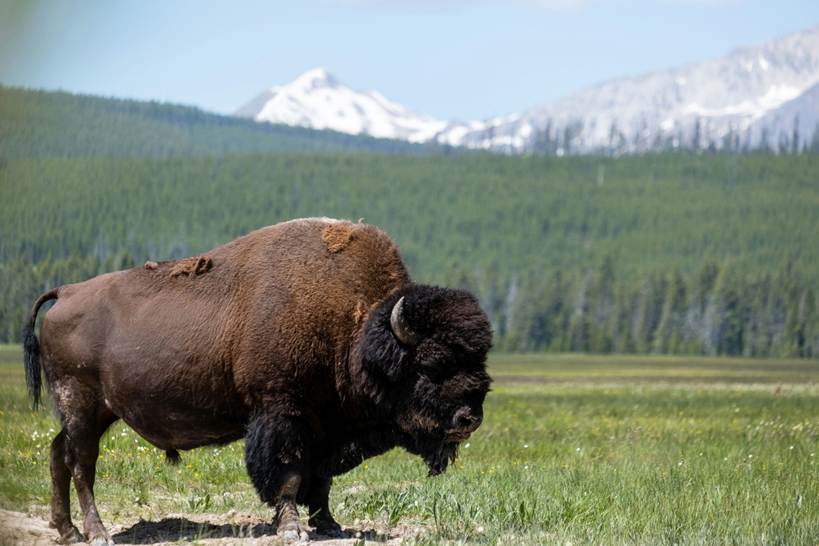
There are now about 7,000 free-roaming bison in Europe
What on Earth is Rewilding?
According to Rewilding Britain it is “- – the large-scale restoration of nature until it can take care of itself – and us – again. It’s about restoring nature’s remarkable web of life, including habitats, natural processes and, where appropriate, missing species.” If you have not seen the documentary about the rewilding of Yellowstone National Park, you must watch it. It is delightful, and exciting.
Here are also a series of films about Rewilding in Europe. They had me cheering in the aisles!
Finally, here is a film about the Knepp Estate in the UK. This is such a wonderful example of a family’s courage and commitment to change. It really is inspiring. Actually it makes me cry every time I watch it!
Rewilding helps people too
One of the lovely things about rewilding is that it can help people too. Much of the land degradation in the world is in areas that have been deserted by people. Often they have abandoned hard lives and gone to live in towns and cities. As there are many huge areas, for example in Europe, with no people, it is much easier to rewild the land. Examples of this are to be found in Portugal in the Greater Côa Valley where the project trains tourism businesses and develops nature-based tourism. In Romania there are now jobs and an economy in eco-tourism focussed on the Carpathian mountains and numerous wetlands.
Rewilding the Seas
We Can Put Nature Back Where it Belongs
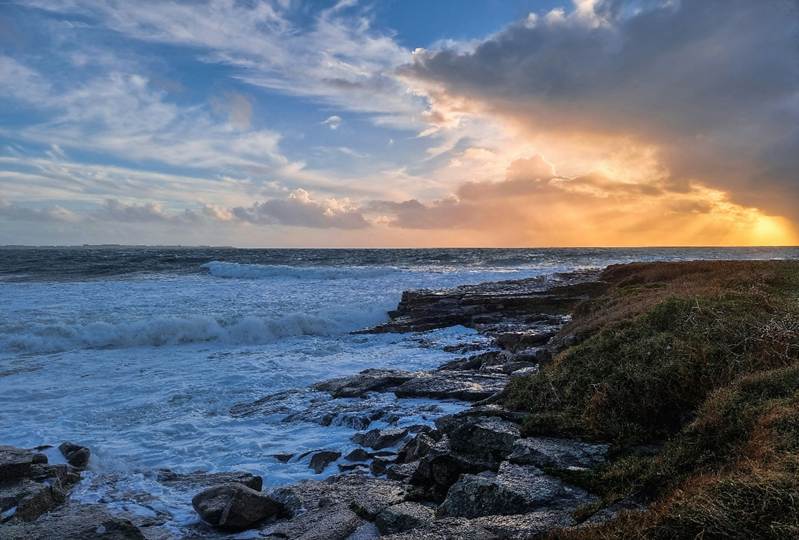
The organisation Rewilding Britain highlights the urgent need to protect and rewild our marine environment. They say that “The case for action could not be clearer. The UK seabed has the potential to sequester (absorb from the atmosphere) nearly three times more carbon annually than all the UK’s forests combined, yet it remains vulnerable to damaging exploitation.”
There are a number of interesting British examples, but worldwide there are many marine rewilding projects.
- Seawilding is the UK’s first community-led native oyster and seagrass restoration project.
Using an innovative technique that translocates seagrass shoots instead of planting seeds, the project has achieved a remarkable increase in seabed coverage – from 10% to 70% in just 15 months – with an impressive 97% survival rate.
- The Sussex Kelp Recovery Project shows successful campaigning resulting in a new bylaw which has now protected the Sussex coastline. Both kelp and other marine life have had a chance to recover and the effect on the seabed is now being examined by scientists.
What I liked about both these projects is that they involve local communities who care about Nature.
What Can You Do to Save Nature?
- We need to continue our individual efforts on Climate Change while remembering we have to also hold larger organisations responsible. Do what you can to encourage those organisations (banks, investors, manufacturing companies and fossil fuel companies) to pay for their actions. Encourage your governments to tax them for the damage they are doing. Write and tell them you won’t use them till they change their business model.
- Only buy new wooden furniture from registered traders, like the Forest Stewardship Council.
- Eat less beef. This helps to avoid deforestation, especially in the important tropical rainforests.
- You can rewild your own garden. This is a British link but the ideas are similar almost anywhere.
- Join a rewilding organisation
- Write to your government to ask them to contribute more for Nature
- Speak to your local Councils and ask them to do more. Encourage what they do.
- Rewilding is not the only way of saving Nature. Find farmers who farm in a Regenerative way and buy their food. Support organisations who are into Conservation – e.g. increasing numbers of tigers or other important species.
There are many things you can do to help. Remember you have economic power and the power of your vote (remember to tell the person you are not voting for, why not!)
Please act now for the future of our young people.
Thank you.
If you are not yet on my mailing list and wish to be on it, please use the form on the Home page, this will help our administration and ensure you receive your own copy.
Photos by Krzysztof Niewolny, Aram and Godefroy Boutet on Unsplash