
Is it Financial?
Climate Change may cost us a lot of money but – – – –
A report by the World Economic Forum says that the global cost of Climate Change damage is estimated to be between $1.7 trillion and $3.1 trillion per year by 2050. They also say that the poorest countries in the world are at greatest risk from the economic impacts of climate change.
The insurance company Allianz says in a recent report that “ the costs (from Climate Change) are not just from destroyed assets, but run through productivity, inflation, consumption, public finances and ultimately growth. That makes climate risk an economic and financial risk that businesses and policymakers need to incorporate into their decisions systematically.”
That all makes me want to scream!
Of course Climate Change will cost us a lot of money – especially if we procrastinate and talk, and do little while the world burns. However that is not really what I mean.
The true costs of Climate Change are not financial but are paid in the future lives of our young people.
The money is not what is Important
The costs of Climate Change are so much bigger than that. Let me tell you what I think the costs are if we don’t seriously tackle the problem:
- Our children’s future
Do we want them to live in “hell on Earth” or to live a reasonable life where they can thrive?
- An environment where Nature has ceased to work
The world will have become a place where we have no fresh water, we can’t grow food and our air is polluted. Biodiversity will be severely depleted.
- An increase in epidemics
Thus there will be an increased likelihood of pandemics.
- Much less true wilderness
Thus fewer areas to find mental and spiritual ease
- A world where there are endless wars
So there will be no peace because we are fighting over the resources for living – like the lack of fresh water.
- Nations full of refugees that are treated as unwelcome
Their old country will have become impossible to live in. This may be because the land is degraded, or there is no water, or simply no future for the population.
- A world where one country is set against another
Because of inequality and anger over lack of support from richer countries for adaption to Climate Change.
- Lands of increasing poverty
Climate Change will cause issues like desertification, degraded soil and less access to food.
- Severe health risks to vulnerable populations
- Millions of deaths
- Much hotter temperatures
- The loss of humanity and our civilisation
In other words there will be costs in health, happiness, young people’s futures, destruction of nature, social justice, equality, poverty, worsening of climate change, independence and soil health. To name but a few.
Some other issues to think about
Coral Reefs
An organisation called Reef Resilience Network has said “Coral reefs are some of the most valuable ecosystems on the planet. While they cover only about 0.1% of the ocean floor, they are home to at least a quarter of all marine species.”
You may not be aware that coral reefs act as fish nurseries, and thus they are a serious source of food and livelihoods to many local people. The organisation has also said that “Over one billion people are directly dependent on reefs for their livelihoods.”
National Geographic in a recent report has said that “The world’s coral reefs are in dire shape”
Fish on a Coral Reef
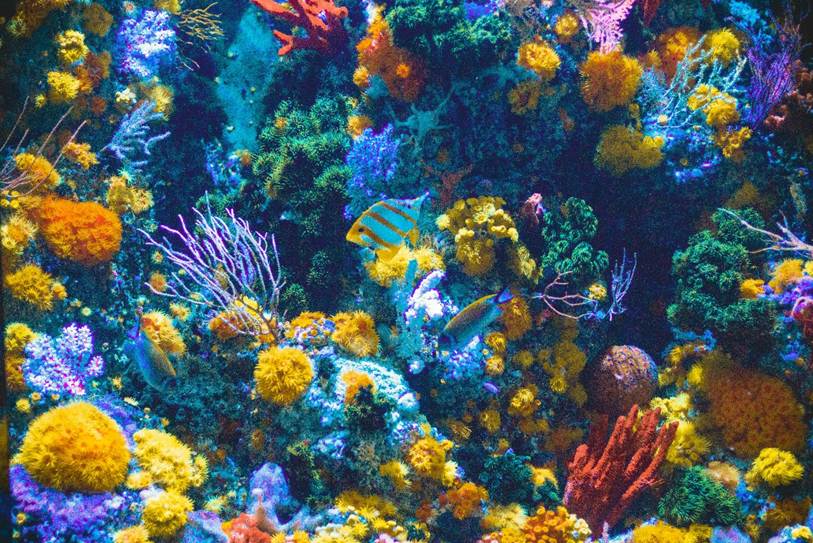
They also say “Coral reefs are among the world’s most valuable natural assets — living infrastructure supporting food security, livelihoods, coastal protection, economies, biodiversity and cultural identity.”
Something else about reefs that I did not know is that many local communities have a strong spiritual connection to coral reefs. Clearly that is something that would disappear too if the reefs lost their living identity through Climate Change.
Sea Level Rise
Climate change causes sea levels to rise primarily through ocean warming and the melting of land-based ice. I understand that for some people this is not a serious problem as the water levels are rising by about three mm per year, although that varies from place to place. Apparently, the average sea-level rise is about 8-9 inches since 1880. That doesn’t seem like much unless you happen to live on a Pacific island somewhere. According to NASA “NASA Analysis Shows Irreversible Sea Level Rise for Pacific Islands.” The Maldives are the flattest country in the world, and it is only 5 metres difference from the highest to the lowest point on the islands. The inhabitants are thus prone to threats like cyclones and flooding. Apparently, the President of the country had a cabinet meeting underwater in 2009 to call attention to the plight of his country!
The C40 Cities report that “by 2050, 800 million people will live in cities where sea level could rise by more than half a metre. Particularly vulnerable are New York and Miami in the US, and Bankok and Shanghai in SE Asia.” Many of those people could become refugees, thus adding to the chaos.
Melting Glaciers
Glaciers play an irreplaceable role in the natural world. Unfortunately humanity’s lifestyle and activities are destroying them. Glaciers in most parts of the world are melting, some rapidly, particularly those in mountainous regions. This is adding to sea level rise and is also causing and will cause huge problems for those depending on them for fresh water. It is also, obviously costing a great deal.
CBS News has been reporting on the melting of the glaciers in the Himalayas where the scientists have said that those glaciers could lose 80% of their ice by the end of the century if Global Warming remains unchecked. This region is the source of water for 12 rivers which provide fresh water for over 2 billion people. It is not hard to imagine the chaos no fresh water would produce.
Recent events in Nepal have shown just how dangerous melting glaciers can be. Apparently, a chunk of ice about 70 metres wide sheared off a glacier in northern Nepal, causing a landslide and incredible damage and loss of life to the communities below.
A group of scientists presented a report to the first World Day for Glaciers in Paris last year, talking about the potential loss of glaciers in the Andes in South America. Their message to world leaders was –
“Act now or face catastrophic consequences.”
I believe the issue for many of us is that we do not understand the cost for individuals of Climate Change and all that comes with it. We have become overwhelmed with the problems that are happening round about us. For many people they choose not to deal with it. I understand that. I often feel powerless. But we are not, I am not!
Understanding the True Cost of Climate Change
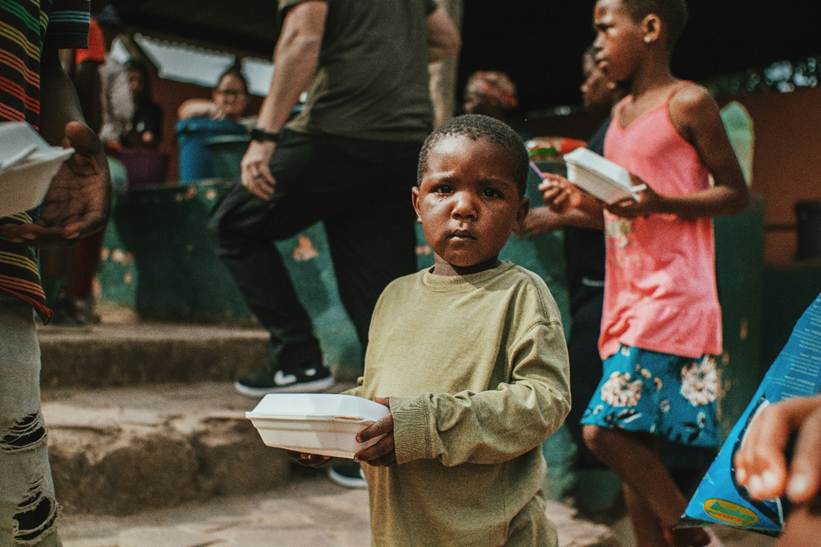
The look on this wee boy’s face says it all to me. We must deal with it. We really have no choice.
We can’t let fossil fuel companies get away with what they are doing. We can’t let politicians say one thing and then do the opposite on Climate Change and Nature.
I know people care. The people of Langholm ( a small town in Scotland) raised over £5 million to buy a large area of land from the local landowner. This transaction was the largest community buyout in southern Scotland. They bought it to create a nature reserve!!
So if a small town can do that – and there are now so many examples like that – then we care!
Let’s care enough to keep our politicians and press and investors in order and clear about what we insist happens. Let’s care enough to change our economy – our Earth matters, we don’t need more stuff!
Let’s care enough about our young people’s future to have the courage to act.
WE MUST!
If you are not yet on my mailing list and wish to be on it, please use the form on the Home page, this will help our administration and ensure you receive your own copy.
Photos by Giorgio Trovato, Shaun Low and Michael Ali on Unsplash